Psalm 123 A Lament of Scorn & Contempt

Lament of Derision & Contempt

            Derision & Contempt. This is the main theme of Psalm 123. What is derision and contempt? In short, it’s bullying.

No one likes bullying except for the one who is doing the bullying. If you’ve ever been on the receiving end of bullying, it’s not pleasant at all. One is made to feel quite small and insignificant in the eyes of those who are participating in it, or in the eyes of those watching on the sidelines—and they’re not doing anything about it!

Our sixteenth president, President Abraham Lincoln, experienced his share of derision and contempt. In political cartoons of the day Lincoln was portrayed as unrefined, awkward, and backwoods in appearance. This reinforced the image of him as an unpolished ‘country bumpkin.’

 History knows him as ‘Honest Abe.’ However, during his time people called him ‘Honest Ape’ to portray Lincoln as a simple-minded and unsophisticated man.

Lincoln was accused as being a tyrant, violating civil liberties, and waging an unnecessary war by Northern Democrats who opposed the Civil War.

Opponents ridiculed Lincoln’s physical appearance calling him ugly and awkward. Opponents didn’t think he was fit for the presidency because of his humble origins and his education was that of being self-taught.

            The media of the day also had their agendas and took shots at Lincoln as well. The New York World and other Democrat-leaning papers attacked his policies and leadership style. The Chicago Times called Lincoln ‘silly, flat, and dishwatery.’

            President Lincoln could have caved under any one of these acts of derision and contempt against him. However, Lincoln had resolve when he faced fierce attacks from opponents. President Lincoln is now one of our country’s most celebrated presidents.

            Psalm 123 is a psalm of lament because of derision and contempt against God’s people because of their faith in Yhwh. When facing the fierce attacks of enemies and opponents, where do His people turn? They turn to the LORD Who is enthroned high above. And so do we.

Readings for the Week of Proper 9B: Ezekiel 2:1-5, Psalm 123, 2Corinthians 12:1-10, Mark 6:1-13

Collect of the Week (prayer for the week): O God, Your almighty power is made known chiefly in showing mercy. Grant us the fullness of Your grace that we may be called to repentance and made partakers of Your heavenly treasures; through Your Son, Jesus Christ, our Lord, who lives and reigns with You and the Holy Spirit, one God, now and forever.

Monday, July 8, 2024

First Things First: Take Off The Blinders

Psa. 123:1       To you I lift up my eyes,

            When we hear about ‘blinders’ we usually think about horses and horse-racing. Blinders are used in horse-racing and carriages to keep the animal focused on what’s ahead of him. The blinders are used to eliminate any distractions around him so that the animal’s focus is on what’s ahead of him.

            Did you know that you can purchase blinders for yourself too? Yup. You can, as seen below. However, every human being comes with a set of invisible blinders. It’s called sin. The blinders of sin keep our focus and attention on what we want to see while blocking out other realities that surround us. This is true, especially to the reality of God in this world. We want to focus on what’s best for ‘me,’ ignoring those who surround me. We want to focus on what’s best for ‘me,’ while ignoring and rejecting God’s word and law in this life. ‘Hey, if I don’t see it then it doesn’t exist.’

            The problem is that when a person continues to wear the blinders of sin, s/he blocks out the reality of God’s love and what He wants for us. Ezekiel was called to proclaim God’s future that His judgment would come upon them if they didn’t remove their blinders. Their eyes needed to be opened, but they refused to remove the blinders.

            Psalm 123 begins with ‘to You I lift up my eyes.’ This psalm is prayed from the posture of a person whose blinders have been removed by God. The Christian sees his sin. The Christian knows her standing before God and what we truly deserve because of it. We cannot live a good enough life to gain God’s favor. When the blinders are removed, we also see what was blocked out because of them. We actually see God’s love for the world—God’s love for you—because now we see the cross of Jesus. The Christian, along with the Psalmist, can sing out this Psalm. In the words of the beloved old Christian hymn How Great Thou Art:

O Lord my God, when I in awesome wonder
    Consider all the works Thy hand hath made,
I see the stars, I hear the mighty thunder,
    Thy pow’r throughout the universe displayed; Refrain

ref         Then sings my soul, my Savior God, to Thee,
    How great Thou art! How great Thou art!
Then sings my soul, my Savior God, to Thee,
    How great Thou art! How great Thou art!

God’s love for you has always been there. It’s just that the blinders needed to be removed first to see it.

2Corinthians 12:7-9a What Do I Do With The Messenger?

Good morning Family!

This reading in 2 Corinthians elicits not a few questions in people. What is this third heaven all about? What is the “thorn” in the flesh of which Paul speaks? And “Why on earth would God send a messenger, or angel, from Satan to bother Paul?

These questions are applicable in the lives of modern people as well when we grow in our walk and relationship with God.

Readings for Proper 9B: Ezekiel 2:1-5, Psalm 123, 2Corinthians 12:1-10, Mark 6:1-13

Click Here for the message.

I love you guys! Dad

Psalm 30:11-12 The Hiddenness of God

Saturday, July 6

The Hiddenness of God

  • Psalm 30:11  You have turned for me my mourning into dancing;
  •                         you have loosed my sackcloth
  •                         and clothed me with gladness,
  • 12      that my glory may sing your praise and not be silent.
  •             O LORD my God, I will give thanks to you forever!

     King David was delivered from whatever caused him lamentation. He moved from terror to exuberating joy. We need to be careful here, however, not turn this into a “cause and effect” relationship with God. In other words, “If I live more humbly, if I pray more often, if I keep my nose cleaner, then God will heal and deliver me from this mess I’m in.” David doesn’t promote anything like that in this prayer. He doesn’t say, “God delivered me and therefore He will deliver you too. Believe it!” Not everyone’s prayer is answered so dramatically as David’s was.

     This psalm “makes a space in the hearts of the faithful for faith’s imagination and desire to grow. He also preserves a sense of mystery or hiddenness in the ways of Yhwh. As Charles Williams says, how God works is beyond our comprehension, but not our attention (The Forgiveness of Sins, 99).”[1]

     A pastor recounts a visit with one of his members:

She was 98 years old. She was blind. She could hardly walk; her body was crippled with arthritis. She had lost her husband years ago to cancer. When I would visit with her, I would say to her, “How are you today, Margaret?” She would always reply, “I have no complaints.” “Are you sure?” I would ask. “I got a roof over my head; I eat three meals a day; I have people who love me, and I know the Lord Jesus. Believe me, Pastor,” she would say, “I have no complaints!”

There’s a hiddenness about God that we simply cannot fathom and understand, especially during times and seasons of suffering and tragedy. Nevertheless, God makes promises. He’s with you no matter what. The language of lamentation shapes the Christian in a life of trust and hope, living in the reality of the moment yet ever forward-looking in the certain hope of Christ Jesus.

In the meantime, God doesn’t remain hidden. The hiddenness of God is uncovered and found in the manger, the life and ministry of Jesus, the cross, and the empty Easter tomb. The hiddenness of God is uncovered to you in God’s Word, through baptismal waters, through confession and absolution in worship, and in Holy Communion—bread and Christ’s Body, wine and Christ’s blood, broken and shed for you for the express purpose that you are assured God forgives you and loves you. Unbelief causes us to look at God through our circumstances, and this creates hopelessness; but faith enables us to look at our circumstances through the reality of God, and this gives us hope.


[1] Timothy E. Saleska, Psalms 1–50, ed. Christopher W. Mitchell, Concordia Commentary (Saint Louis, MO: Concordia Publishing House, 2020), 497. Ftnt 21.

Psalm 30:8-10 To Dust You Shall Return

Friday, July 5

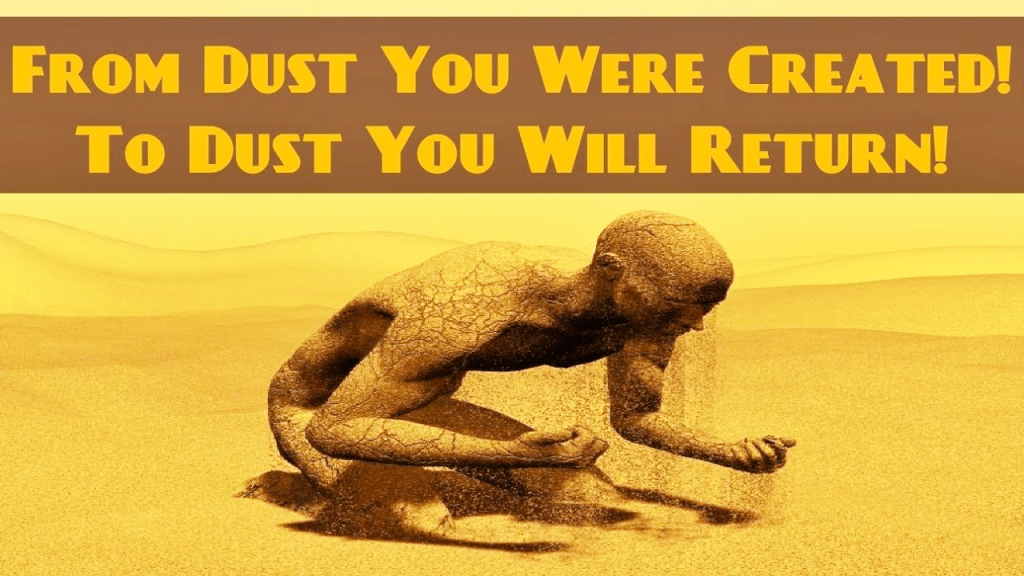
To Dust You Shall Return. The End?

  • Psalm 30:8        To you, O LORD, I cry,
  •           and to the Lord I plead for mercy:
  • 9      “What profit is there in my death,
  •           if I go down to the pit?
  •       Will the dust praise you?
  •           Will it tell of your faithfulness?
  • 10      Hear, O LORD, and be merciful to me!
  •           O LORD, be my helper!”

     How did Mankind come into existence? What is the purpose of Man? What’s your purpose here on this planet? Each person will answer this according to their worldview: “Is there a god? If so, what are his or her demands from me? If there is no god, then I’m in charge of my own destiny.”

     Ancient religions and civilizations had their story of creation and the purpose for humankind coming into existence. Jack Klien is Professor (Emeritus) in the Department of Hebrew and Semitic Languages and the Department of Bible Studies at Bar Ilan University. He holds a Ph.D. in Oriental Studies from the University of Pennsylvania and an M.A. in the Bible from Bar Ilan University. He summarizes an ancient Sumerian composition from extant texts concerning humanity’s creation. According to the Sumerian composition it was a contest between ENKI AND NINMAḪ.

“This archaic and still partly incomprehensible myth praises Enki, the god of the subterranean fresh waters, wisdom and magic, for having planned and directed the creation of mankind and for having devised ways in which the physically handicapped could adjust to society. The myth seems to consist of two originally independent stories. The first part tells the story of the creation of man rather briefly (lines 1–43). Man was created from pieces of clay, placed in the womb of the mother-goddesses where he obtained his form and was given birth. He was created for the purpose of relieving the gods from their hard labor, and especially from digging canals for irrigation agriculture. The second part (lines 44–139) tells of a contest between the mother-goddess Ninmah and Enki during a feast celebrating man’s creation. At first Ninmah creates a number of crippled and handicapped human beings, challenging Enki to solve their problem. Enki cleverly “decrees their fate,” assigning them a function in society whereby they earn their living in an honorable way. When Ninmah gives up, it is Enki’s turn to create an abnormal creature. Enki creates a human wreck, whose nature cannot be precisely determined (either an aborted fetus or an old man), and with which Ninmah is unable to cope. The end of the second part is damaged and obscure, but it is clear that Enki prevails over Ninmah in the contest. The myth concludes with the following statement (lines 140–141): “Ninmah did not equal the great lord Enki/ Father Enki, your praise is sweet.” In spite of its fragmentary state of preservation, the myth is highly important from the point of view of the history of religion because it is the earliest composition dealing with the theme of man’s creation, and as such it is a forerunner to the First Tablet of the Babylonian Story of the Flood (see text 1.130), as well as to the two parallel stories of creation of man in the Bible (Gen 1–2).”[1]

     The One true and only God created humanity for a completely different reason and purpose. We are the crown jewel of God’s creation given the privilege to worship and praise God, live in harmony and peace with Him for eternity, and be stewards of His very good Creation.

     The powers of Sin, Death, and the devil turned this upside-down. Nevertheless, God’s purpose remains unchanged, including giving Him worship and praise. This is why King David says to God during his time of lament, “If You let me die and I return to the dust, how in the world can I praise you from the grave?”

     Because of sin all people will die sooner or later including you and me (unless Christ returns before that). God created humanity to live forever. Little wonder we don’t relish dying and death. We heard this in the Gospel reading for this week. Jairus’ daughter was ill and on the brink of death. And because Jesus was held up by the woman in the reading today, Jesus didn’t arrive in time to heal the little girl. Jairus’ daughter succumbed to death. Not only did Jairus lament her illness, but now he lamented her death.

     This is the judgment that we incurred upon ourselves. Yet God would not let the devil and death have the final word. God would still receive praise and worship from His creatures—today as well as for eternity. Death and dust are not a period. They are merely commas. Jesus is the period.

     Saleska comments:

“The nation of Israel walked in this rhythm. It was in the morning, after a terrifying night, that Yhwh delivered his people from the Egyptians (Exodus 14). When the Assyrians were set to wipe out the nation, the author of 2 Kings writes: ‘And that night the angel of Yhwh went out and struck down 185,000 in the Assyrian camp. And the people arose early in the morning, and behold, these were all dead bodies’ (2 Ki 19:35). God’s ways with his people are summed up by Isaiah: ‘For a brief moment, I forsook you, but with great compassion I will gather you. In an outburst of wrath, I hid my face from you, but with everlasting love I will have compassion on you’ (Is 54:7–8).

In moving from God’s wrath to his favor, God’s people will go from weeping in the evening to a ringing cry in the morning; from sowing in tears to reaping in joy; from mourning to dancing. For us, it will be like being drawn up and out of a dark well.

… Death always seems to have the upper hand. And yet the types and shadows are not irrelevant. They get our attention and urge us to look beyond them. And when we do, we can see that they come together and end in Jesus. He is the center of the pattern. He brings coherence to these scattered fragments of hopes and dreams. What the psalmist has hinted at we see in all its glory. ‘A moment in his wrath—life in his favor’ (Ps 30:6 [5]) takes on full colors when we see the experience of Jesus at the hand of his Father, who ‘was pleased to smite him’ (Is 53:10), but then dramatically raised him from the dead (at the break of dawn, as one could have expected). And this one is alive never to die again.” …

It is true that ‘dust’ cannot praise God (30:10 [9]), and so the Father raised Jesus for the glory of his name. And it is this Word that we proclaim in song and sermon and prayer. This Word is where we put our hope. He gives a shape to ‘a moment in his wrath—life in his favor; in the evening, weeping takes lodging, but in the morning—a ringing cry’ (Ps 30:6 [5]). It is not just an abstract truth. It has its concrete incarnation in the death and resurrection of Jesus, God’s Word to the world.”[2]


[1] Hallo, William W. and K. Lawson Younger Jr., eds., Canonical Compositions from the Biblical World. COS 1, p. 516. Accordance electronic edition, version 1.0. Leiden: Brill, 2003.

[2] Timothy E. Saleska, Psalms 1–50, ed. Christopher W. Mitchell, Concordia Commentary (Saint Louis, MO: Concordia Publishing House, 2020), 500–501.

Psalm 30:6 The Shot Heard ‘Round The World

Happy 4th of July Family! July 4, 1776 is the birthday of our country. We have freedoms and liberty that are envied around the world. Especially, we have the freedom and liberty to worship God publicly without retribution–at this point.

I’m getting back in the swing of things. Yes. This recording is from last Sunday. However, it has a July 4th theme. So, that’s my explanation for getting out today.

Readings for Proper 8B: Lamentations 3:22-33; Psalm 30; 2Corinthins 8:1-9, 13-15; Mark 5:21-43

Click Here for the message.

Have a GREAT Week! I love you guys! Dad

Psalm 30:4 Out Of The Shadows

Wednesday, July 3

Out Of The Shadows


Psa. 30:4        Sing praises to the LORD, O you his saints,

          and give thanks to his holy name.

5      For his anger is but for a moment,

          and his favor is for a lifetime.

      Weeping may tarry for the night,

          but joy comes with the morning.


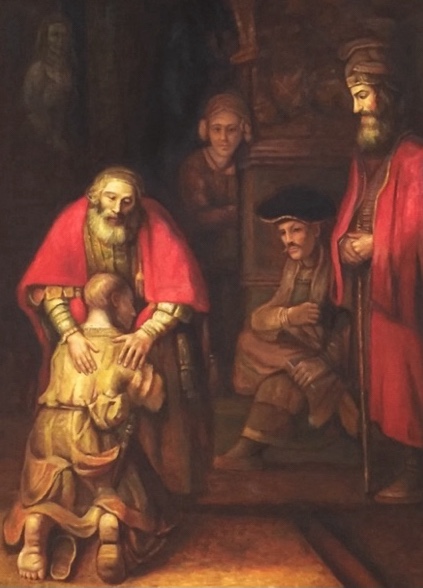
     Rembrandt mastered the technique of using light and shadow in his paintings. One of Rembrandt’s most famous paintings is The Return of the Prodigal Son completed in 1669. To the right stands the older brother with his hands folded in judgment unable to understand and accept the compassion of the father toward his younger son. He cannot comprehend what’s going on. A little to the right of the older son sits a man darkened a bit more in the shadows. He could represent the wisdom of the culture judging the situation. Culturally, a son who would have disowned his father should in no way be welcomed back. Further back and darkened more by the shadows are two figures representing the crowd that was gathered. “What is this father doing? Why would he welcome back this reprobate?”

     Though the shadows and figures within the shadows are a part of the painting, the light is cast on the father and the prodigal son. In the light we see the father’s hands—one larger than the other. The right hand represents the nurturing hand of a mother, and the left represents that of a protective, loving father.

     In the light is also the prodigal son; his clothes worn and ragged, his sandals barely held together. Whatever else is going on in the shadows, it’s the father welcoming back his son that’s in the light. No judgment. No condemnation. Simply forgiveness, love, and compassion.

     God indeed disciplines His people. He doesn’t like sin because it separates Him from His creatures. It wasn’t God’s fault. It was our fault. We created the shadows in which we find ourselves in this world. In God’s anger He needed to pronounce judgment, and because of this there are times we find ourselves in situations where all we can do is lament and repent.

     The final shadow of this world is death and grave. No one can escape this. Even with all the modern medicine and technology available, we will all be engulfed in Death’s shadow.

     As real as this is it’s still merely in the shadow. The night always gives way to the light of the morning. It has to because light is stronger than darkness. From the shadows of suffering and tragedy God shines the Light of Jesus. In the shadow of the cross is the certain life of Christ’s resurrection. Shadow and light come together in Christ Jesus your Lord and Savior. Indeed, this world including you and me, must live under God’s judgment and discipline because of sin and death. Yet as King David proclaims in prayer:

For his anger is but for a moment,

          and his favor is for a lifetime.

      Weeping may tarry for the night,

          but joy comes with the morning.

Psalm 30:1 All’s Well

Monday, July 1

All’s Well

Psalm 30:1        I will extol you, O LORD, for you have drawn me up

               and have not let my foes rejoice over me.


     Dateline: October 14, 1987. 18-month-old little Jessica McClure, known to the world as Baby Jessica, fell into an uncapped well on her aunt’s property. The well was twenty-two feet deep and only eight inches wide. Would she be found alive? If so, how in the world would they rescue Baby Jessica from such a perilous situation in time? This story made international headlines as for the next fifty-eight hours the world watched and waited on the edge of their seats hoping against hope.

     Oxygen was pumped down the well to keep Baby Jessica alive. The frightened and wailing toddler was comforted as rescuers sang nursery rhymes down the shaft. Fifty-eight hours later, after drilling a parallel shaft, Baby Jessica was brought out alive as the world rejoiced. She was scared, bruised, and scarred, but alive, nonetheless. The rescue was a success.

     King Dave extols the LORD. Why? Well, it’s because the LORD drew him up from the well in which he found himself. There’s a play on words in this verse. ‘Extol’ means to raise or draw up. ‘Drawn up’ is to draw water up from a well. David raises up the LORD in his life because the LORD had drawn up David and rescued him from the deep, dark well of his situation. Both Yhwh and the poet are moving up, but in both actions, the poet is, so to speak, on the bottom, and Yhwh is up top[1]

     It’s easy to play “Monday morning quarterback” reviewing the Sunday’s plays after the fact. King David is not playing Monday morning quarterback here. As he was in the well David clung to the promises of God. He knew that one way or the other, God would come through. How would God come through? He didn’t know this. But David believed that God would come through. God’s rescue may have been according to David’s prayer, or His rescue might have been a different outcome. Nevertheless, David trusted God.

     When you’re in a deep, dark well you are not alone. God is there in the well with you. He’s comforting you. He’s experiencing the darkness with you. He draws you up. He points you to the ultimate Rescuer Jesus to give you hope.


[1] Timothy E. Saleska, Psalms 1–50, ed. Christopher W. Mitchell, Concordia Commentary (Saint Louis, MO: Concordia Publishing House, 2020), 492.

The Language of Lament

Learn A New Language:

     The readings for Proper 8B (June 30-July 6, 2024) this week have a common thread, and that thread is lamenting. So, what exactly is lamenting? Some might say that it’s whining and complaining. “Just suck it up and deal with it,” might be the advice given to someone who is lamenting. We might say this to ourselves as well. “Just suck it up and deal with it.”

     Well, what is the “it” with which the human must deal? The “it” is the human experience, and more specifically, dealing with the human experience of suffering and pain created and lived out in a fallen, broken, sin-filled world. Things are not as they ought to be. Situations and events happen in this world and in our lives that throw us off kilter. They disrupt our lives. They throw us from orientation to disorientation as we’re faced with a different or new reality.

     Lamenting is not a bad thing. In fact, lamenting is the language of faith as the Christian cries out to God from the midst of suffering, pain, or tragedy. The language of lament is really quite biblical. This language needs to be recaptured and taught within the Christian Church.

     Reasons why we lament are many: losing a loved one to death, unfulfilled dreams and regrets, injustice and suffering, existential and spiritual crises, social and cultural changes, natural disasters and tragedies, health issues, or cultural and historical memories. There’s no shortage of things that can bring people to a point of lamenting.

     There are two basic causes that move a person to lament:

  1. A sin committed by the person, which produces guilt, shame, or remorse. Many times we make wrong choices as a Christian. In this case, the person must come to God in repentance. God gives us the gift of confession and absolution (forgiveness after confessing). In confessing our sins to God, it’s not as if we’re telling God what He doesn’t already know. He knows all things, and He knows our hearts.
  2. There are times in life when evil things happen to a person. These are things that are existential. They’re out of our control, nevertheless, they happen to us and we suffer and are in pain because of them. “My dad is an addict. Why would God do this to my mom?”

God wants His people to come to Him and let God Himself deal with our pain and suffering. Sometimes people believe that they need to get rid of the pain or suffering before entering or returning to church, especially if it’s self-induced. We don’t need to get rid of the pain and suffering before coming to church. Church is the place in which to bring our pains and sufferings. God already knows everything about you—the good, the bad, and the ugly. The lamenting Christian comes before God not only because He invites us to do so. The Christian comes by His invitation because he knows and believes something about God. That belief—that faith—is that God makes promises, and He never goes back on His promises.

Then there are the things in life that happens to a person that comes out of leftfield. When things are incongruent in our lives according to what God has promised, the Christian comes before God, “Where are You, God? How come You’re not delivering on Your promise like you said?” The Christian possesses something that the rest of the world does not have, however. The Christian possesses the belief that God actually can and does make things happen even in the here and now.

     God knows your laments. He’s actually experienced them Himself. God personally knows and experienced the human condition when He enfleshed Himself in the person of Christ Jesus. Jesus Himself laments over Jerusalem (Luke 19:41-44). The Son Himself was truly abandoned completely by the Father on the cross (a real mystery of which no one can comprehend). The death and resurrection of Son has ushered in God’s plan for salvation and hope. The Christian knows this. The Christian believes this because God has promised it. It is that future grounded in Jesus’ death and resurrection that makes all the difference in the world, and this is the language the Christian speaks even in the midst of suffering and lamentation. God is there with you in the margins of life.

COLLECT OF THE DAY

Heavenly Father, during His earthly ministry Your Son Jesus healed the sick and raised the dead. By the healing medicine of the Word and Sacraments pour into our hearts such love toward You that we may live eternally; through the same Jesus Christ, our Lord, who lives and reigns with You and the Holy Spirit, one God, now and forever.

     The Collect of the Day is a prayer the Church prays in recognition of Christ’s earthly ministry. As important as the cross and empty Easter tomb is for humanity, we should not forget about His earthly and healing ministry. Christ’s “healing and raising from the dead” ministry shows the world what things will be like on a universal scale when He returns in all His glory and majesty. Christ’s future certain return gives the Christian hope in the present, even in the midst of suffering, pain, and tragedy.

Lamentations 3:22-33

     Unbelief causes us to look at God through our circumstances, and this creates hopelessness; but faith enables us to look at our circumstances through the reality of God, and this gives us hope.

Look at yourself and you’ll be depressed.

Look at circumstances and you’ll be distressed.

Look at the Lord and you’ll be blessed!

2Corinthians 8:1-9, 13-15

Mark 5:21-43

1John 5:9-12 NO MIDDLE GROUND: Just The Facts

Good morning Family!

This is the close of the Easter Season in the Christian Church. We’re winding down the readings in 1John, which was part of the readings during the Easter Season this year. As St. John does throughout this letter, he assures his original readers that there is no middle ground when it comes to God and eternal life. It’s all about Jesus and only Jesus.

St. John ends his letter by having them, and us, take a look at the two testimonies–or facts–available. The facts from God are greater than the testimony of humans. God’s testimony are the grounds for the Christian’s faith and certainty.

Readings: Acts 1:12-26, Psalm 1, 1John 5:9-15, John 17:11-19

Click Here for the message

I love you guys! Dad

1John 5:4 NO MIDDLE GROUND: Christ’s Victory Is Our Faith

Good morning Family!

This is the Sixth Sunday/Week of Easter. And every day is Christmas and Easter for the Christian.

Do you ever have those days where you feel a sense of defeat? Life seems blah. The world’s events are out of control and you think to yourself, “Is anyone in control of what’s going on?” Do you wake up some days (or MANY days) feeling defeated and deflated? Well guys, the Bible gives us certain hope including VICTORY. The Christian lives each day in and through the victory of Jesus’ Easter resurrection.

Readings for Easter 6B: Acts 10:34-48, Psalm 98, 1John 5:1-8, John 15:9-17

Click here for the program and message

Have a GREAT DAY Family! I love you guys! Dad