Psalm 85 Christmas in July!

Psalm 85 is the appointed Psalm for the week in the Christian Church. Yes. It’s July, but Psalm 85 points to Bethlehem’s Manger and the Christ Child.

 
Christmas & Land?
Psalm 85:1-3
1          LORD, you were favorable to your land;
                        you restored the fortunes of Jacob.
2          You forgave the iniquity of your people;
                        you covered all their sin. Selah
3          You withdrew all your wrath;
                        you turned from your hot anger.
 
   The Thanksgiving dinner is finished. The guests have gone home. Family members from out of town remain to help consume the remainder of the turkey. Ohhhh! There’re are thousands of turkey recipes just for this time of the year.
   The next week, Thanksgiving gives way to Christmas. What are some of the first things you think about as the Christmas seaon approaches: getting the rest of the decorations up, where will you get the tree, who’s on my gift-giving list that I haven’t shopped for, what are the Black Friday and Cyber Monday deals? There’s so much to think about as we get ready for Christmas.
   And of course, the very first think everyone thinks about is—LAND. “What??!! That came out of left field Pastor. What does land have to do with Christmas?” Well, I’m glad you asked.
   In Psalm 85:1 the psalmist bases his prayer on God’s promises and His faithfulness. Note he begins with you were favorable to your land. Land theology is important in the Bible, but it’s not something we consider or really think about at all, especially during Christmas.
   Humanity is intricately linked to the land. In Creation God created water and land. He created the ground. From the ground God created Adam, and from Adam God created Eve. Rev. Dr. Reed Lessing, a Lutheran Old Testament theologian and scholar, has written a wonderful excursus (article) on land theology and it’s importance to the Christian. This excursus can be found in Lessing’s commentary on Amos from Concordia Publishing House. Lessing writes this:
 
   The Hebrew “Adam, mankind” (אָדָם) comes from the noun for “ground” (אֲדָמָה). The two are linked to each other in life, in death, and at the resurrection. After death the body decomposes into the dust of the earth until the bodily resurrection when “the earth will give birth to the dead” (Is 26:19; cf. Rev 20:13) and those “sleeping in the dusty ground” shall awake and be physically raised—believers to everlasting life and unbelievers to everlasting contempt (Dan 12:2–3).
   The tragic result of Adam and Eve’s sin was that the ground brought forth thorns and thistles (Gen 3:17–18). Death came to our first parents and through them to all humanity. Death also came to animals and plants—all living creatures. As a result of rampant sin, the world was inundated by a flood (Genesis 6–8) that killed most of humanity and most of its animals. Sodom and Gomorrah became an ecological disaster because of human wickedness and the sexual perversion of homosexuality (Gen 13:10–13; 19:24–28). The plagues were disruptions in the created order that God caused in Egypt as part of his plan to save his people from slavery under Pharaoh and the gods of Egypt (Exodus 7–11) so that he could lead his redeemed people into the promised land. Prophets repeatedly link human sin with cosmic destruction (e.g., Jer 4:22–26; Hos 4:1–3) and also promise the new heavens and new earth that is the inheritance of all God’s faithful servants (Isaiah 11; 65–66).[1]
 
   The Christian awaits the time when the heavens (stars, universe, plants, etc.) and earth will be renewed. We wait for the time when the wolf shall dwell with the lamb, the leopard shall lie down with the young goat, and the cow and the bear will graze together (Isaiah 11). This will take place on land. In Isaiah 35 we also hear that there will be a reverse of the curse upon the land: the wilderness and dry land will rejoice, the desert will blossom abundantly, waters will break forth in the wilderness and streams in the desert, and so forth. The land is really important to God because He made it, and it belongs to Him.
   The first Adam blew it. What’s needed is another Adam, the second Adam, another One from the earth, but without sin. That One is the Christ child (Romans 5:14; 1Corinthians 15:22, 45).
   God incorporates you into the second Adam, the last Adam, Jesus. In Christ, God makes you a part of His new creation. This is something to ponder, but don’t wait until Christmas to do it!


[1] R. Reed Lessing, Amos, Concordia Commentary (St. Louis: Concordia Publishing House, 2009), 74.

Psalm 123:4 I Can’t Take It Anymore

Saturday, July 13, 2024
I Can’t Take It Anymore!
 
Psalm 123:4   Our soul has had more than enough
                        of the scorn of those who are at ease,
                        of the contempt of the proud.
 
            Let’s face it. There are times in life when things go on and on and on and on. “I can’t take it anymore! Make it stop!”
            This psalm ends open-endedly. We’re left with no apparent resolution, no answer, and we desperately want one. What do we do when we cannot take it anymore? Paul experienced this in his life and ministry on behalf of Jesus Christ. The other apostles experienced this as well. As a matter of fact, the Christian Church has experienced scorn, persecution, hostility, and contempt right from the get-go. It’s not you so much that’s the problem. It’s really a rejection, hostility, and attack on God and His Christ, Jesus. And remember, Jesus experienced rejection, scorn, and derision from His own family, and when He visited His own hometown. The ultimate scorn, hostility, and contempt happened when Jesus was nailed to the cross. The King of Glory from the heaven of heavens took the lowliest place of scorn, hostility, and contempt for you and me on the cross.
We have the same promise from Jesus that Paul received concerning the ridicule and scorn he experienced: My grace is sufficient for you.
            Paul’s prayer seemed to be answered open-endedly. He prayed three times that this thorn of contempt, scorn, and derision would be removed. However, his relief comes not in the removal of the thorn but rather in an abiding relation with Christ. As he has repeatedly made clear in 2Corinthians (a letter to the Christian Church in Corinth), salvation is granted not through the possession of gifts and powers but in participation in Christ. Here and elsewhere with Paul, grace is before all else personal favor. Like Paul, the Christian rests in God’s promises. The Christian rests in assurance of God’s favor toward him. When the devil brings scorn, derision, hostility, and contempt in your life, when people mockingly say, “Where’s your God?”, and the devil begins to whisper doubts in your ear, God reminds you that you are a baptized child of the King enthroned high above in the highest of heavens, and He’s always personally with you on your journey here.
 

Psalm 85 It’s Christmas In July!

A Mighty & Merry Christmas to you Family!

No. Your Dad hasn’t completely lost it. I’m well aware that Christmas is December 25th. Nevertheless, Christmas is EVERY DAY for the Christian.

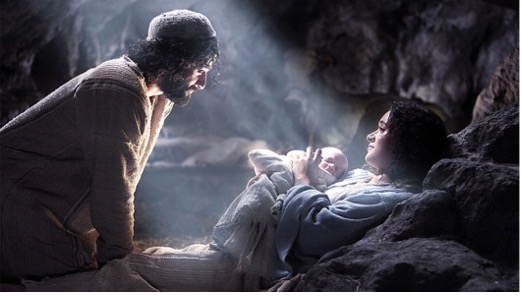
Psalm 85 points to what’s known as the “Incarnation.” This is a big, churchy word from the Early Church, and it’s Latin. The prefix “in” means “to put on.” “Carna” means “flesh.” Squish them together and Incarnation means “to put on flesh.” And this is precisely what God did for the world as He enfleshed Himself in the person of Jesus, the Christ child born in Bethlehem’s manger.

God brings together two realms in the Christ child. He brings together the heavenly divine realm from above, and the earthly realm from below in the Babe born in Bethlehem. Psalm 85 points forward to this Blessed Gift from God.

Readings for Proper 10B: Amos 7:7-15, Psalm 85, Ephesians 1:3-14, Mark 6:14-29

Click Here for the message

Have a blessed Christmas today! I Love you guys! Dad

Psalm 123:3 Dual Citizenship

 
Friday, July 12, 2024
You Have Dual Citizenship
Psalm 123:3  Have mercy upon us, O LORD, have mercy upon us,
                        for we have had more than enough of contempt.
 
            Part of being a Christian—a Christ follower—is that we live in this present evil age (Galatians 1:4). And because we exist in this present evil age, there are opponents who despise God and His Christ, Jesus. The Christian Church, and thus the Christian, is going to experience times of contempt and derision in life. That’s just a fact for the Christian who lives out his faith in this world. It’s not pleasant, but it’s a fact. It’s all the more hurtful when these attacks come from family members and friends who like to jeer us for following Jesus.
            This is nothing new. Paul, when he became a Christ follower, experienced this as well and then some! His life became way more difficult as he now suffered contempt and derision verbally and physically. In the end, Paul suffered death rather than renouncing Jesus Christ as the Savior.
            In this week’s reading in 2Corinthians, Paul recounts the experience God gave him to be transported to the Third Heaven (see Tuesday’s devotion). Paul not only experiences the Third Heaven, but He also sees Paradise. And what is Paradise? Well, it’s God’s New Creation, His restored Eden that He will usher in fully at Christ’s Jesus return.
            You have dual citizenship. You’re a citizen of this fallen, broken world, which includes the evil of hostility against Christians. Nevertheless, this is still the Father’s world, and you are one of His very dear children.
            You’re also a citizen of the God’s New Creation. This is your present reality right now too. The Bible tells us in Romans 6:5
For if we have been united with him in a death like his, we shall certainly be united with him in a resurrection like his.
            The word “united” in the Greek means “being grown together.”[1] Jesus is the Vine, and we are the branches (John 15:5). God intertwines the life, death, and resurrection of Jesus within you. This happened in your baptism, which is why we treasure Baptism as God’s precious gift to us.
            The Christian is on a journey. We are driven to trust and prayer. “The pilgrimage is a turning from the world’s words of contempt for trust and obedience to the one whose ways are gracious. … The pilgrims look from a world that questions their god to the God who rules the world.”[2]
            The wonderful old beloved Christian hymn brings comfort in times of lament when experiencing hostility:
 
I’m But a Stranger Here
1     I’m but a stranger here,
    Heav’n is my home;
Earth is a desert drear,
    Heav’n is my home.
Danger and sorrow stand
Round me on ev’ry hand;
Heav’n is my fatherland,
    Heav’n is my home.
 
2     What though the tempest rage,
    Heav’n is my home;
Short is my pilgrimage,
    Heav’n is my home;
And time’s wild wintry blast
Soon shall be overpast;
I shall reach home at last,
    Heav’n is my home.
 
3     Therefore I murmur not,
    Heav’n is my home;
Whate’er my earthly lot,
    Heav’n is my home;
And I shall surely stand
There at my Lord’s right hand;
Heav’n is my fatherland,
    Heav’n is my home.
Text: Public domain
 
You are a citizen of the New Creation, Paradise, right now!


[1] Σύμφυτος (symphytos);Bauer, W., F. W. Danker, W. F. Arndt, and F. W. Gingrich, eds. A Greek-English Lexicon of the New Testament and Other Early Christian Literature. 3d, Accordance electronic edition, version 2.8. Chicago: University of Chicago Press, 2000.; Liddell, Henry George, Robert Scott, and Henry Stuart Jones, eds. A Greek-English Lexicon. 9th; Accordance electronic edition, version 2.7. Oxford: Oxford University Press, 1940.
[2] Mays, James Luther: Psalms. Louisville : John Knox Press, 1994 (Interpretation, a Bible Commentary for Teaching and Preaching), S. 394

Psalm 123:2c Role Reversal

Thursday, July 11, 2024
Role Reversal
Psalm 123:2c  so our eyes look to the LORD our God,
                        till he has mercy upon us.
 
            The meditation yesterday focused on the Christian’s status as a slave in Christ. The reason the Christian willing submits to Christ is because of the role reversal Jesus took on in His life, ministry, death, and resurrection. Jesus, who didn’t never felt the consequences of sin—guilt, shame, abandonment by God—became God’s sin-offering in your place. There on the cross Christ Jesus willingly enslaved Himself with our sins and consequences therein. Jesus is the Servant of Yhwh prophesied in Isaiah (Isaiah 42:1–4; Isaiah 49:1–6; Isaiah 50:4–11; and Isaiah 52:13–53:12), Who willing took on the bondage of your sin, and paid the penalty and penalty phase for them. Three days later on Easter morning, The Servant of Yhwh broke through death, the grave, and the chains of sin that rightly should have held each and everyone of us. Now you are free because Jesus stood in your place. This is the great role reversal of God’s plan for salvation, and in Christ Jesus He reversed the curse. This is God’s love for you!
            God has brought us from slavery in the kingdom of darkness to sin, death, and the devil into slavery in God’s Kingdom of Light, eternal life, and Christ Jesus. In thankfulness for what Christ has done the Christian now lives a life submitting to Christ.
           
            “‘Behold, as the eyes of servants look unto the hand of their masters… so our eyes wait upon the LORD our God, until that he have mercy upon us’ (Psalm 123:1). The psalmist shows the intensity of his looking by comparing it to the action of servants (both menservants and maidservants) in watching their masters for orders. Charles Spurgeon gives some ways in which the servants watch their masters to show how the psalmist is watching God regarding mercy.
            • The servant watches the master respectfully. ‘Hand of their masters.’ The looking with much care at the Master shows the respect of the servant for the Master.
            • The servant watches the master attentively. ‘Look unto the hand of their masters.’ The hand more than the voice often gave the servants orders in Bible lands. So the servant watched the hand with great attentiveness. Any small movement could put the servant into action. Watching God attentively for mercy will perceive the slightest act of mercy and inspire one that more mercy can and is coming.
            • The servant watches the master continuously. ‘Eyes… look up to the hand.’ This is denotes continuous watching. To fail to look one moment meant you could miss an order.
            • The servant watches the master singly. ‘Their masters.’ The servants were not watching other servants or other Masters, but they were watching one person, namely, their master.
            • The servant watches the master expectantly. ‘Until.’ The servants expected orders, so the psalmist expected mercy.
            • The servant watches the master submissively. ‘So our eyes wait upon the LORD our God.’ Watching involves waiting. Waiting involves patience. Patience involves submission. So the psalmist watches submissively for Divine mercy.”[1]


[1] Butler, John G. Volume 6 PSALMS. Analytical Bible Expositor 6. Accordance electronic edition, version 1.3. LBC Publications, 2012. 810.

Psalm 123:2 It Means Being A Slave

Wednesday, July 10, 2024
It Means Being A Slave
Psalm 123:2   Behold, as the eyes of servants
                        look to the hand of their master,
 
            Our country recently celebrated The 4th of July—Independence Day. Here in the United States of America, God has granted our country and her citizens great freedoms to live out in community as well as individual freedoms. We certainty should be thankful for all of these and celebrate Independence Day.
            However, independence doesn’t mean that we are independent from God. God is enthroned over all Creation, including each and every human being. With the blessing of individual freedoms here in America, it’s very easy for the American Christian to lose sight of what truly is our relationship with God through the Lord Jesus Christ,
            Psalm 123:2 grounds and affirms this relationship. The Christian is a servant. The Greek translation uses the word doulos which means ‘slave,’ ‘to being under someone’s total control.’[1] The Hebrew word is ʿeḇeḏ ‘slave or servant.’
            ‘While the most basic idea of ʿeḇeḏ is that of a slave, in Israel slavery was not so irksome, since this status involved rights and often positions of trust. A fellow Israelite could not be held indefinitely against his will, but his period of bondage was limited to six years (Ex 21:2).’ [2]
            This is the position of the Christian before God. This is not just a Sunday morning thing when we go to church. It’s not even a ‘whole 24-hours on a Sunday’ thing where the Christian is free from this slave status the remaining six days of the week. No. This status of the Christian as slave to God is a 24/7/365 (24 hours/7 days a week/365 days a year) position and status. The Christian looks to the hand of the Master for all good things. The first place each person needs to look and gaze upon are the hands of the Master nailed to the cross for all humanity including you and me.
It is to God that the Christian’s eyes are fixed. God is the loving God who truly wants what’s best for His people. The Christian trusts this promise, even during the times he laments hosility and contempt from others on account of the Christian faith.
We don’t find ourselves in these prayers. Rather the truth is that we find ourselves through these prayers. We are slaves to God and dependent upon Him. It brings to light who one must be and who one is in crying out to the LORD from the depths of existence.[3] In Christ’s hands—His crucified and resurrected hands—is your future.[4] And your future in Christ’s hands is what gives you strength for today.


[1] Bauer, W., F. W. Danker, W. F. Arndt, and F. W. Gingrich, eds. A Greek-English Lexicon of the New Testament and Other Early Christian Literature. 3d, Accordance electronic edition, version
[2] Kaiser, Walter C. Harris, R. Laird, Gleason L. Archer, and Bruce K. Waltke, eds. Theological Wordbook of the Old Testament. Accordance electronic edition, version 2.5. Chicago: Moody Press, 1980.
 
[3] Mays, James L. Psalms. IBC. Accordance electronic edition, version 2.2. Louisville: Westminster John Knox Press, 2011.
[4] Keil, C. F. and Delitzsch F. Commentary on the Old Testament. Accordance electronic edition, version 2.7. 10 vols. Peabody: Hendrickson Publishers, 1996.

Psalm 123:1b What Do You See?

Tuesday, July 9, 2024
What Do You See?
Psa. 123:1b   O you who are enthroned in the heavens!
 
            The blinders have been removed (see yesterday’s meditation). Our eyes can now see more as our peripheral vision is expanded. We see what’s truly in this world—the good, the bad, and the ugly. We see and experience the unbelieving world’s contempt and scorn against Christ Jesus and His Church. The Christian is on the receiving end of this as we want to live by God’s law and word in our life. There are Christians who are thrown in jail simply because they believe and stand for the sanctify of all life—regardless of color. There are Christians around the world who are undergoing severe persecutions, tortures, and even death sentences simply because they follow Christ Jesus and will not renounce and reject Christ Jesus.
            When the Christian laments derision and contempt in his life, there’s no other direction to look except for up. When the Christian looks up, he sees God in His rightful place. He is enthroned in the Heavens.[1]
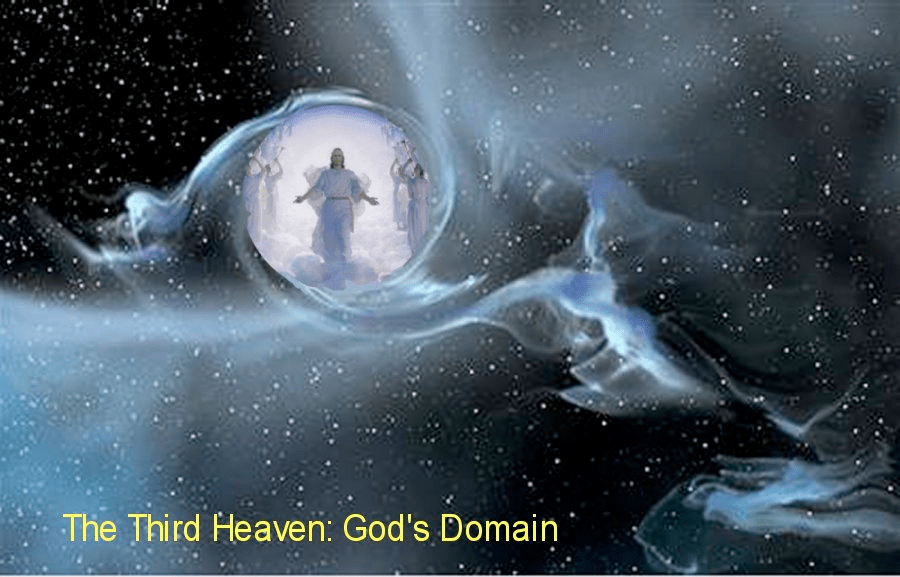
            So, where is God enthroned? Well, as St. Paul tells us in 2Corinthians 12, God is enthroned in the third heaven. In ancient times people understood this as the highest of heaven, the heaven of heavens. There’s nothing beyond this, and this is the place reserved only for God, from whence He reigns and rules over His whole Creation.
            No matter what we go through and experience in this life, including ridicule and contempt against Christ and the Christian faith, it doesn’t go unnoticed by God. We pray to Him to something about it. We wonder why He doesn’t act. We plead for help and assistance, especially when ‘I’ am on the receiving end.
            God Who is enthroned in the highest heaven has done something about it. He put flesh on Himself and was enthroned in the manger. God became one of us in order to save us from ourselves. God’s Christ was enthroned on the cross of Calvary and was crowned with the lowest crown possible—the crown of thorns of our sins with His palace being death and a tomb.
            Three days later Jesus came back to life, never to die again. He has resumed His rightful place on His throne in the highest of heavens, the heaven of heavens. And this One who is enthroned above is going to return one day.
            Until that Day, King Jesus continues to come to His subjects who live in this world filled with derision and contempt against Him. He comes to us in a very real way through His Word and Sacrament. He moves our eyes in the right direction.


[1] When we read and pray the psalms, we should slow down in our reading and meditate on what’s in that particular psalm. For instance, Psalms 121 and 123 begin in similar ways by lifting up one’s eyes. In Psalm 121 the psalmist lifts up his eyes to the hills. His help comes from the LORD, who made heaven and earth. The psalm’s focus is on God as Creator. In Psalm 123 the psalmist lifts up his eyes and sees this very same God enthroned in heaven. The focus of Psalm 123 is God as the Ruler over all other rulers and kingdoms.

Psalm 123 A Lament of Scorn & Contempt

Lament of Derision & Contempt

            Derision & Contempt. This is the main theme of Psalm 123. What is derision and contempt? In short, it’s bullying.

No one likes bullying except for the one who is doing the bullying. If you’ve ever been on the receiving end of bullying, it’s not pleasant at all. One is made to feel quite small and insignificant in the eyes of those who are participating in it, or in the eyes of those watching on the sidelines—and they’re not doing anything about it!

Our sixteenth president, President Abraham Lincoln, experienced his share of derision and contempt. In political cartoons of the day Lincoln was portrayed as unrefined, awkward, and backwoods in appearance. This reinforced the image of him as an unpolished ‘country bumpkin.’

 History knows him as ‘Honest Abe.’ However, during his time people called him ‘Honest Ape’ to portray Lincoln as a simple-minded and unsophisticated man.

Lincoln was accused as being a tyrant, violating civil liberties, and waging an unnecessary war by Northern Democrats who opposed the Civil War.

Opponents ridiculed Lincoln’s physical appearance calling him ugly and awkward. Opponents didn’t think he was fit for the presidency because of his humble origins and his education was that of being self-taught.

            The media of the day also had their agendas and took shots at Lincoln as well. The New York World and other Democrat-leaning papers attacked his policies and leadership style. The Chicago Times called Lincoln ‘silly, flat, and dishwatery.’

            President Lincoln could have caved under any one of these acts of derision and contempt against him. However, Lincoln had resolve when he faced fierce attacks from opponents. President Lincoln is now one of our country’s most celebrated presidents.

            Psalm 123 is a psalm of lament because of derision and contempt against God’s people because of their faith in Yhwh. When facing the fierce attacks of enemies and opponents, where do His people turn? They turn to the LORD Who is enthroned high above. And so do we.

Readings for the Week of Proper 9B: Ezekiel 2:1-5, Psalm 123, 2Corinthians 12:1-10, Mark 6:1-13

Collect of the Week (prayer for the week): O God, Your almighty power is made known chiefly in showing mercy. Grant us the fullness of Your grace that we may be called to repentance and made partakers of Your heavenly treasures; through Your Son, Jesus Christ, our Lord, who lives and reigns with You and the Holy Spirit, one God, now and forever.

Monday, July 8, 2024

First Things First: Take Off The Blinders

Psa. 123:1       To you I lift up my eyes,

            When we hear about ‘blinders’ we usually think about horses and horse-racing. Blinders are used in horse-racing and carriages to keep the animal focused on what’s ahead of him. The blinders are used to eliminate any distractions around him so that the animal’s focus is on what’s ahead of him.

            Did you know that you can purchase blinders for yourself too? Yup. You can, as seen below. However, every human being comes with a set of invisible blinders. It’s called sin. The blinders of sin keep our focus and attention on what we want to see while blocking out other realities that surround us. This is true, especially to the reality of God in this world. We want to focus on what’s best for ‘me,’ ignoring those who surround me. We want to focus on what’s best for ‘me,’ while ignoring and rejecting God’s word and law in this life. ‘Hey, if I don’t see it then it doesn’t exist.’

            The problem is that when a person continues to wear the blinders of sin, s/he blocks out the reality of God’s love and what He wants for us. Ezekiel was called to proclaim God’s future that His judgment would come upon them if they didn’t remove their blinders. Their eyes needed to be opened, but they refused to remove the blinders.

            Psalm 123 begins with ‘to You I lift up my eyes.’ This psalm is prayed from the posture of a person whose blinders have been removed by God. The Christian sees his sin. The Christian knows her standing before God and what we truly deserve because of it. We cannot live a good enough life to gain God’s favor. When the blinders are removed, we also see what was blocked out because of them. We actually see God’s love for the world—God’s love for you—because now we see the cross of Jesus. The Christian, along with the Psalmist, can sing out this Psalm. In the words of the beloved old Christian hymn How Great Thou Art:

O Lord my God, when I in awesome wonder
    Consider all the works Thy hand hath made,
I see the stars, I hear the mighty thunder,
    Thy pow’r throughout the universe displayed; Refrain

ref         Then sings my soul, my Savior God, to Thee,
    How great Thou art! How great Thou art!
Then sings my soul, my Savior God, to Thee,
    How great Thou art! How great Thou art!

God’s love for you has always been there. It’s just that the blinders needed to be removed first to see it.

2Corinthians 12:7-9a What Do I Do With The Messenger?

Good morning Family!

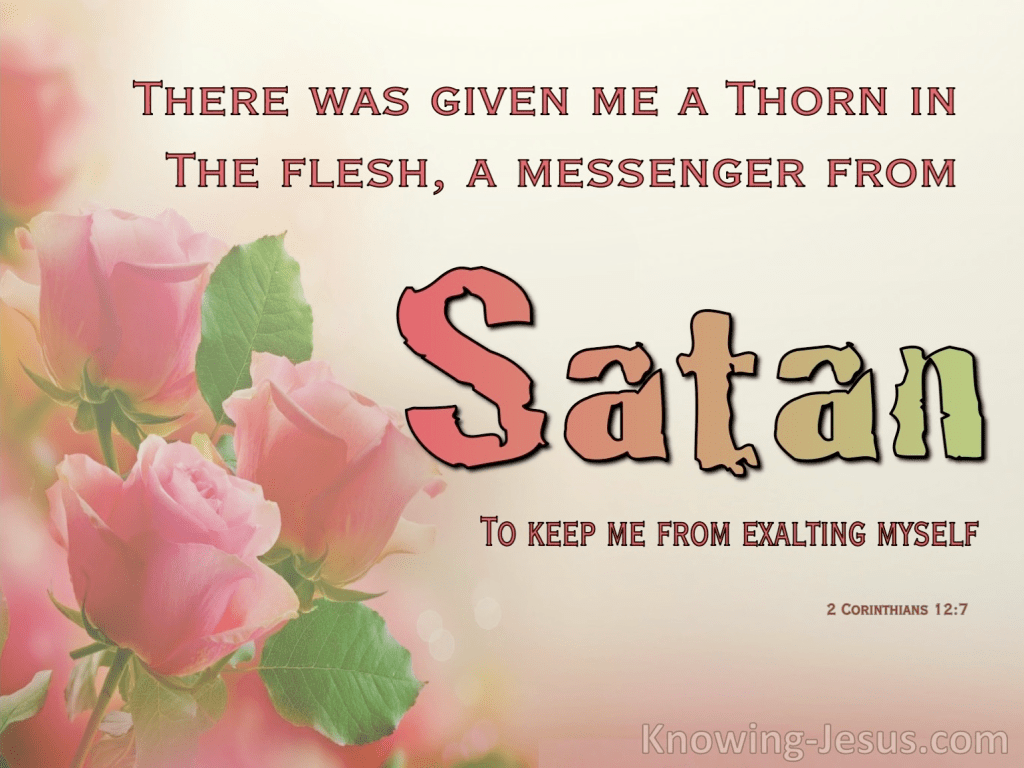
This reading in 2 Corinthians elicits not a few questions in people. What is this third heaven all about? What is the “thorn” in the flesh of which Paul speaks? And “Why on earth would God send a messenger, or angel, from Satan to bother Paul?

These questions are applicable in the lives of modern people as well when we grow in our walk and relationship with God.

Readings for Proper 9B: Ezekiel 2:1-5, Psalm 123, 2Corinthians 12:1-10, Mark 6:1-13

Click Here for the message.

I love you guys! Dad

Psalm 30:11-12 The Hiddenness of God

Saturday, July 6

The Hiddenness of God

  • Psalm 30:11  You have turned for me my mourning into dancing;
  •                         you have loosed my sackcloth
  •                         and clothed me with gladness,
  • 12      that my glory may sing your praise and not be silent.
  •             O LORD my God, I will give thanks to you forever!

     King David was delivered from whatever caused him lamentation. He moved from terror to exuberating joy. We need to be careful here, however, not turn this into a “cause and effect” relationship with God. In other words, “If I live more humbly, if I pray more often, if I keep my nose cleaner, then God will heal and deliver me from this mess I’m in.” David doesn’t promote anything like that in this prayer. He doesn’t say, “God delivered me and therefore He will deliver you too. Believe it!” Not everyone’s prayer is answered so dramatically as David’s was.

     This psalm “makes a space in the hearts of the faithful for faith’s imagination and desire to grow. He also preserves a sense of mystery or hiddenness in the ways of Yhwh. As Charles Williams says, how God works is beyond our comprehension, but not our attention (The Forgiveness of Sins, 99).”[1]

     A pastor recounts a visit with one of his members:

She was 98 years old. She was blind. She could hardly walk; her body was crippled with arthritis. She had lost her husband years ago to cancer. When I would visit with her, I would say to her, “How are you today, Margaret?” She would always reply, “I have no complaints.” “Are you sure?” I would ask. “I got a roof over my head; I eat three meals a day; I have people who love me, and I know the Lord Jesus. Believe me, Pastor,” she would say, “I have no complaints!”

There’s a hiddenness about God that we simply cannot fathom and understand, especially during times and seasons of suffering and tragedy. Nevertheless, God makes promises. He’s with you no matter what. The language of lamentation shapes the Christian in a life of trust and hope, living in the reality of the moment yet ever forward-looking in the certain hope of Christ Jesus.

In the meantime, God doesn’t remain hidden. The hiddenness of God is uncovered and found in the manger, the life and ministry of Jesus, the cross, and the empty Easter tomb. The hiddenness of God is uncovered to you in God’s Word, through baptismal waters, through confession and absolution in worship, and in Holy Communion—bread and Christ’s Body, wine and Christ’s blood, broken and shed for you for the express purpose that you are assured God forgives you and loves you. Unbelief causes us to look at God through our circumstances, and this creates hopelessness; but faith enables us to look at our circumstances through the reality of God, and this gives us hope.


[1] Timothy E. Saleska, Psalms 1–50, ed. Christopher W. Mitchell, Concordia Commentary (Saint Louis, MO: Concordia Publishing House, 2020), 497. Ftnt 21.