Psalm 23:3 Desolate Places to Green Grass

3        He restoreth my soul:

    he leadeth me in the paths of righteousness

 for his name’s sake.

       Is today a day where you could certainly use some green pastures beside some still waters? Are you seeking an exodus from the woes of this world? That was the situation of the crowd that followed Jesus and His disciples that day in the Gospel reading for the week: the Feeding of the 5,000. They carried their sick and lame friends and relatives to the other side even beating Jesus and the disciples there. Imagine carrying and transporting your sick, ill, disease-ridden relatives that distance. Imagine bringing your blind, deaf, lame, or mute friend. Imagine that you are one of these people seeking green pastures and still waters in the midst of wilderness and deserted places. This was the dire situation in which the people found themselves. They were looking for hope because they were sheep without a shepherd.

       It’s interesting to note a detail in Mark’s account of the feeding. The people come to a desolate, remote, uncultivated place. They’re looking for a Shepherd to take care of them, and they come to see Jesus. Remember, Jesus is Yhwh in the flesh. He is the LORD to Whom King David prays in Psalm 23:1.

       When we get to Mark 6:39 the desolate place is now transformed and described as green, fresh grass. Psalm 23 is definitely in the background of Mark’s account of Jesus feeding the 5,000. Jesus is God’s Deliverer of His people leading us in the New Exodus. [1] Jesus is God’s Good Shepherd leading His flock through desolate places on the way to the New Creation. Jesus is the One who encourages His sheep when we get physically, emotionally, and spiritually exhausted. He alone restores hope and joy in our soul.

       Jesus brings to life the reality of the New Exodus leading you to God’s eternal Promised Land. He leads you on God’s path of righteousness for His name’s sake, not ours. God has His reputation at stake, and He’s always good for His word. [2] He’s right here with you—right now—leading you out of desolate places to the New Creation where He has His forever green pastures and still waters waiting for you. Until then, the Good Shepherd is here with you.


[1] James W. Voelz, Concordia Commentary: Mark 1:1–8:26, ed. Dean O. Wenthe (St. Louis, MO: Concordia Publishing House, 2013), 424.

[2] Timothy E. Saleska, Psalms 1–50, ed. Christopher W. Mitchell, Concordia Commentary (Saint Louis, MO: Concordia Publishing House, 2020), 410.

Psalm 23:2 The Nestea Plunge

2.  He maketh me to lie down in green pastures:

    he leadeth me beside the still waters.

       As I write this, it’s 100 degrees here in the Grand Valley of Colorado, not untypical for summer heat in the high desert area of Western Colorado. At least it’s a dry heat. The reward comes in the evening when temperatures usually drop about 30 degrees.

       As a kid I grew up in the Midwest where there was not only the heat but add to that the humidity! But never fear. There was always Nestea Iced Tea to cool you off. Do you know about the Nestea Plunge? In the mid to late 70s Nestea ran a marketing campaign called the Nestea Plunge. You can look up the commercials online. The commercials featured someone who was in the heat, working or playing or whatever. The point was that this person was hot and sweaty, and looking for some sort of relief.

       From where did their relief come? Right on que the person has an ice-cold, ice cube filled tall glass of Nestea iced tea. They take their first drink and instantaneously they’re plunged into a pool of cool water. The point? When you’re hot, tired, and sweaty and looking for relief, take the Nestea plunge and you’ll be revived.

       There are times in everyone’s life where, at the end of the day (and during the day), the heat of our lives can take a toll. We look for relief, but where do we go? Psalm 23:2 gives the answer.

       The Good Shepherd leads you to green, fresh pastures as opposed to the deserted places with dry grass. [1] The Good Shepherd brings God’s future refreshment to you in the present through the Sacrament of Baptism. There in Baptism is where God claimed you as one of His dear little lambs. There in your Baptismal waters the Living Water, Jesus, brings you refreshment, especially on those days when you’re feeling the heat of life.  The Ancient Church Fathers remind us of this as well.

THEODORET OF CYR: He hints at the water of rebirth, in which the baptized person longs for grace and sheds the old age of sin and is made young instead of being old. COMMENTARY ON THE PSALMS 23.2.

AUGUSTINE: He nurtured me beside the water of baptism, where those who have lost their soundness and strength are made new. EXPOSITIONS OF THE PSALMS 23.1–2.

CASSIODORUS: “The water of refreshment” is the baptismal font through which the soul, barren because of the dryness of sin, is watered by divine gifts in order that it may produce good fruits. EXPLANATION OF THE PSALMS 23.2.[2]

        When you are parched and thirsty from life’s sins and the devil’s attacks, remember the cooling refreshing waters of your Baptism where God Himself plunged you into the Living Water of His Son. The Good Shepherd took the heat for you on the cross so that, even in the midst of the dryness of this world, He refreshes you with His grace and love.


[1] James W. Voelz, Concordia Commentary: Mark 1:1–8:26, ed. Dean O. Wenthe (St. Louis, MO: Concordia Publishing House, 2013), 422.

[2] Blaising, Craig A. and Carmen S. Hardin, eds., Psalms 1–50. ACCS 7. ICCS/Accordance electronic edition, version 2.6. Downers Grove: InterVarsity Press, 2008. 179.

Psalm 23:1 Looking For A Better Tomorrow?

1   The LORD is my shepherd; I shall not want.

       Have you ever come to the end of the day hoping and praying for a better tomorrow? The single parent trying to keep the family afloat while at the same time trying to have some “me” time to recharge. At the end of the day, however, the tomorrow’s hamster wheel is in full view waiting for you to jump back in tomorrow morning. The person trying to get ahead financially in this transitory inflationary economy that’s been anything but transitory. The spouse caring for his or her elderly husband or wife. Dementia, Alzheimer’s, cancer, you name it. The end of the day seems so dark and the prospects for a new beginning seem way out of reach and out of sight.

       Then Psalm 23 comes along with the opening verse. I shall not want means that I shall lack no good thing. At the end of the day this verse hits the Christian who lacks energy to go on, finances to get to the next month, the strength to endure the heartbreak of a beloved spouse who’s not going to get any better. So, what’s this verse really all about? Is there a new beginning at the end of the day?

       This Psalm is not about living the idyllic life as it’s often understood. In fact, this Psalm is just the opposite.[1] Psalm 23 is not for those who died, but for those who are still living in desolate, dark places.

       King David penned this prayer believing that Yhwh was his Good Shepherd. That means King David himself is one of His sheep. Sheep are totally dependent on the shepherd for everything—food, drink, and protection. Being a sheep is a way of life 24/7/365. There’s never a time when sheep are independent because independence from the shepherd puts the sheep in danger, or worse, death. St. Augustine wrote: “When you say, ‘The Lord is my shepherd,’ no proper grounds are left for you to trust in yourself.”[2]

       The LORD is my Shepherd, I shall lack no good thing. This seems to be an extravagant statement, especially at the end of the day when we’re looking for a new beginning. Rev. Dr. Saleska writes about this in his commentary on Psalm 23:

How can these extravagant claims be true? Is the psalmist making a prediction, “I may be lacking now, but in the future, I will not lack anything,” or is he describing his present reality, “it may look like I am suffering lack, but actually I lack nothing”? Is he reminding and encouraging himself because he is experiencing doubt? Or is he doing something else? Should the speaker’s claim be taken literally, or is it hyperbole? All are possible ways to understand the speaker’s utterance.

Regardless of the force behind the speaker’s words, God’s people tend to take his utterance not as hyperbole but—strange as it may seem to others—as literal truth. We see it as one version of a familiar profession central to our faith. A core belief is that our God is all we really need and that he is the only one able to take care of all our (other) needs. Because God promises to hold us in the hand of Christ, the Good Shepherd (Jn 10:11, 27–30), we can trust him and let go of other needs and desires. (Admittedly, though, this belief is often accompanied by doubts. We are sheep, after all.)[3]

       The Good Shepherd Jesus is Yhwh God in the flesh. This is the kind of God He is. He entered the human condition of His creation in order to bring hope and new breath into peoples’ lives. The Good Shepherd experienced everything that you do and more. He laid down His life for you on the cross. That’s how important you are to Him. And three days later He took up His life being raised from death and the grave that will eventually claim each one of us. However, death and the grave do not have the final word. Exhaustion and frustration do not have the final word. Worries and doubts do not have the final word. The Good Shepherd has the final word and that word in resurrection. In His death and resurrection Jesus has transformed the future, and He brings you that hope and certainty in your life today.

       Is there a new beginning at the end of the day? There absolutely is. Put your trust in the Good Shepherd.


[1] Hans-Joachim Kraus, A Continental Commentary: Psalms 1–59 (Minneapolis, MN: Fortress Press, 1993), 306–307.

[2] Blaising, Craig A. and Carmen S. Hardin, eds., Psalms 1–50. ACCS 7. ICCS/Accordance electronic edition, version 2.6. Downers Grove: InterVarsity Press, 2008. 178.

[3] Timothy E. Saleska, Psalms 1–50, ed. Christopher W. Mitchell, Concordia Commentary (Saint Louis, MO: Concordia Publishing House, 2020), 409–410.

Psalm 23: Can There Be A New Beginning At The End of the Day?

At The End of the Day … A New Beginning

Psalm 23 (King James Version)

A Psalm of David.

1   The LORD is my shepherd; I shall not want.

2 He maketh me to lie down in green pastures

    he leadeth me beside the still waters.

3        He restoreth my soul:

    he leadeth me in the paths of righteousness

 for his name’s sake.

4 Yea, though I walk through the valley of the shadow of death

I will fear no evil:

    for thou art with me;

thy rod and thy staff

they comfort me.

5 Thou preparest a table before me

in the presence of mine enemies:

   Thou anointest my head with oil;

my cup runneth over.
6 Surely goodness and mercy shall follow me

all the days of my life:

   and I will dwell in the house of the LORD for ever.

   Psalm 23 is probably one of the most recognized Psalms in the Bible. In fact, Psalm 23 is one of the most recognized texts in all of Scripture. This is a Psalm that is prayed by many people who seek comfort and assurance. This Psalm is read at many funerals to bring comfort to mourning family members and friends. Even marginal Christians and non-Christians recognize parts of Psalm 23: He leads me beside still waters, He restores my soul, He makes me lie down in green pastures, and He leads me through the valley of the shadow of death.

   Psalm 23’s background is that of the Exodus of God’s people when the LORD delivered them out of Egypt. Between Egypt and the Promised Land was a LOT of wilderness and desolate places—literally and figurartively. During the wilderness journey God’s people were completely dependent on Yhwh to supply their daily needs of water, food, shelter, and protection. When we read the Bible, we also read about all the times that God’s flock wandered from God’s protection and His ways thus putting themselves in danger and harm’s way. We see ourselves in this as well, because their story is our story. Nevertheless, God made a promise—a covenant—with His people, and He would not (and still does not) go back on His word to them and to you.

Propers 11; Series B–St. John’s Tide (Readings for the Week of July 21-27, 2024)

Jeremiah 23:1-6

   Here’s an instance where God’s sheep are not at fault per se. They’ve been completely misled by the religious leaders who have led them astray. To be sure, they’re guilty for wandering away from Yhwh, nevertheless, they were led astray by the very people who were supposed to shepherd them on God’s path of righteousness.

   The focus is on the “shepherds” who were preying upon God’s flock rather than shepherding and praying for God’s flock. Now, God would visit the shepherds. God Himself would make a personal inspection. And then God Himself would provide a Shepherd Who would actually care about the safety and well-being of God’s flock. This Shepherd would always be present with them, and He Himself will also go out to recover and retrieve those who are lost and gone astray. He’s the owner of the sheep after all.

Ephesians 2:11-22

   Paul’s audience for this epistle are the Gentiles. Under the Jewish practice of worship and God’s covenant, it was unthinkable that Gentiles would be considered a part of God’s flock. There were “ways” to bring a Gentile under the covenant, but this was done through a completely human perspective and work promoted by the Jewish leaders. In order for Gentiles to be brought under God’s covenant, the non-Jew would need to carry out circumcision, comply with dietary laws, and the like. In short, Gentiles would need to convert to Judaism by living Jewishly.

   However, this was not the way God laid out His plan for salvation. God’s plan for salvation is through faith in His Son, Jesus, alone. That’s it. Period. Paul reminds his Gentile audience—and us—that being a part of God’s flock is pure gift language accomplished by God’s grace. They, and we, have been brought near by the blood of Christ. “Have been brought” is passive, which means that God is the subject of the verb “to bring.” He is acting upon us, thus, we have nothing to do with this. “Near” is the adverb describing the verb “to bring.” In other words, God doesn’t bring us half-way and then we have to figure out the rest. God brings us all the way into His presence. God does so by the blood. “By the blood” is the agent, or means, by which God brings us near Him into His presence. “Of Christ” is the source of the blood. This is God’s gift to you because God provides the means and the source for you salivation. He does it all, and God does it all for you because God indeed does love you—yes, you!

Mark 6:30-44

   Psalm 23 is in the background of Mark’s account of the Feeding of the 5,000: sheep who have not been shepherded by those who were charged to do so; lost, and helpless sheep, sheep seeking a shepherd who would love them and care for them; desolate places suddenly being transformed into fresh green grass; a banquet where the people were completely filled and satiated or satisfied. Indeed, this Shepherd cares about the people in a way that other religious leaders failed to do. It was late in the day for the people—figuratively and literally. They were looking for a new beginning as the people sought a Shepherd, which is why they came to see Jesus and no one else.

COLLECT OF THE DAY (the prayer of the Church for the week)

Heavenly Father, though we do not deserve Your goodness, still You provide for all our needs of body and soul. Grant us Your Holy Spirit that we may acknowledge Your gifts, give thanks for all Your benefits, and serve You in willing obedience; through Jesus Christ, Your Son, our Lord, who lives and reigns with You and the Holy Spirit, one God, now and forever.

Psalm 85:12-13 Moving Forward With Christmas

Saturday, July 20, 2024

Moving Forward With Christmas

Psalm 85:12-13

12        Yes, the LORD will give what is good,

                        and our land will yield its increase.

13        Righteousness will go before him

                        and make his footsteps a way.

   Christmas is that time of year when most all people seem to walk differently, they’re happier and filled with more joy. Even curmudgeons have a change in their demeanor during the Christmas season.

   People emphasize “peace” during this time of the year as well. This peace is not something that can be found in the world and in worldly ways. The peace that people seek will never be found in this world or among governments. The peace that surpasses all human understanding is found exclusively in the Prince of Peace, the Christ child, Jesus. He alone is the conduit between God and Creation, between the holy and the sinner. This is why God sent His Son into this world—in order to reconcile the world and sinners to Himself bringing hope and eternal life in God’s New Creation.

   Marvin Tate shares an aspect of shalom in his commentary on Psalm 85:

Shalom is the comprehensive concept of well-being, peace, and welfare which includes love, faithfulness, righteousness, prosperity, and glory. W. Brueggemann (Living Toward a Vision: Biblical Reflections on Shalom [Philadelphia: United Church Press, 1982] 16) has summarized Shalom in vigorous descriptive language with reference to Lev 26:4–6 and Ezek 34:25–29a: ‘It is well-being that exists in the very midst of threats—from sword and drought, and from wild animals. It is well-being of a material, physical, historical kind, not idyllic pie in the sky, but salvation in the midst of trees and crops and enemies—in the very places where people always have to cope with anxiety, struggle for survival, and deal with temptation. It is well-being of a very personal kind . . . but it is also deliberately corporate. If there is to be wellbeing, it will not be just for isolated, insulated individuals; it is rather security and prosperity granted to a whole community—young and old, rich and poor, powerful and dependent. Always we are all in it together.’ This is the word of Yahweh for his people.”[1]

And from Reardon:

Christ, then, “is our peace” (Eph. 2:14), and likewise our “righteousness and sanctification and redemption” (1 Cor. 1:30). It is of these things that our psalm says: “Righteousness shall go before Him, and He will set His footsteps in the way.” This is the Christ who “came and preached peace to you who were afar off and to those who were near” (Eph. 2:17). This the Christ, “being both begotten of the Father before all ages, and created from the Virgin in these final times” (Ambrose, op. cit. 3.9.60).

We pray with confidence, then, in the words of our psalm: “I shall hear what the Lord God speaks within me, for peace will He speak to His people, and to His saints, and to those who turn their hearts to Him.”[2]

   Christmas isn’t what “it used to be.” The culture seems to have taken hold of Christmas and molded it into its own image of what it thinks Christmas is all about. However, this is nothing new. This has been going on for the last 2000 years in attempt to ignore the reason for the season.

   Yet God is greater and more powerful than societies, cultures, and civilizations. He is the Creator of all things and all people. The Christ child continues to call people who are looking for answers, who are looking for hope, who are seeking that for which only Jesus is the answer. And so, Christmas continues to walk forward bringing hope and salvation to all who will hear.

St. Luke’s Account of the Christ child’s birth; Christmas!

Luke 2:1-14 (King James Version)

   Luke 2:1 And it came to pass in those days, that there went out a decree from Caesar Augustus, that all the world should be taxed. 2 (And this taxing was first made when Cyrenius was governor of Syria.) 3 And all went to be taxed, every one into his own city. 4 And Joseph also went up from Galilee, out of the city of Nazareth, into Judaea, unto the city of David, which is called Bethlehem; (because he was of the house and lineage of David:) 5 To be taxed with Mary his espoused wife, being great with child. 6 And so it was, that, while they were there, the days were accomplished that she should be delivered. 7 And she brought forth her firstborn son, and wrapped him in swaddling clothes, and laid him in a manger; because there was no room for them in the inn.

   8 And there were in the same country shepherds abiding in the field, keeping watch over their flock by night. 9 And, lo, the angel of the Lord came upon them, and the glory of the Lord shone round about them: and they were sore afraid. 10 And the angel said unto them, Fear not: for, behold, I bring you good tidings of great joy, which shall be to all people. 11 For unto you is born this day in the city of David a Saviour, which is Christ the Lord. 12 And this shall be a sign unto you; Ye shall find the babe wrapped in swaddling clothes, lying in a manger.

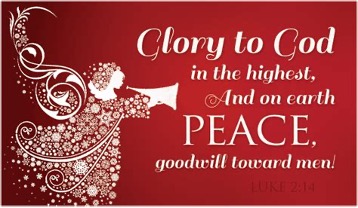
Luke 2:13 And suddenly there was with the angel a multitude of the heavenly host praising God, and saying,

14 Glory to God in the highest,

and on earth peace, good will toward men.


[1] Tate, Marvin E. Psalms 51–100. WBC 20. Accordance electronic edition, version 2.7. Grand Rapids: Zondervan, 1990.

[2] Patrick Henry Reardon, Christ in the Psalms (Chesterton, IN: Ancient Faith Publishing, 2000), 168.


Mark 6:35 & Psalm 23:2 Is There A New Beginning At The End Of The Day?

Hi Family! How’s your day going? And what’s it like at the end of your day? Are you full of energy; exhausted? Do you look at the day that just passed and wonder what tomorrow will bring you? Will tomorrow be better than today? Could it be any worse?

Psalm 23 and the Feeding of the 5,000 are some of the readings for this week. At the end of the day when it’s late in the day, the people were looking for hope. Would there be a new beginning at the end of their day?

Readings for Proper 11B: Jeremiah 23:1-6, Psalm 23, Ephesians 2:11-22, Mark 6:30-44

Click Here for the message

There’s always a new beginning with the Good Shepherd.

I love you guys! Dad

Psalm 85:10-11 Holly & Mistletoe

Friday, July 19, 2024
 
Holly & Mistletoe
Psalm 85:10-11
10        Steadfast love and faithfulness meet;
                        righteousness and peace kiss each other.
11        Faithfulness springs up from the ground,
                        and righteousness looks down from the sky.
 
 
   If you’re a romantic, you’re sure to have a mistletoe hung up somewhere in your home during the Christmas season. If you’re standing under the mistletoe—awares or unawares—you’re going to give or receive at least a peck on the cheek.
   For whatever reason, this reminds of the childhood song sung by children in days of yore. Don’t ask me the connection. This is simply how my brain works.
 
Mary and Michael sitting in a tree;
K-I-S-S-I-N-G
First comes love,
Then comes marriage,
Then comes baby in a baby carriage.
 
   The ‘kissing’ in this song is the beginning of a relationship between two people. There’s an attraction there, which grows stronger.
   Psalm 85:10-11 is packed with great promises and attributes of God. “Steadfast love” is expressed in God’s act of strength and victory, salvation and deliverance. “Faithfulness” is God’s truthfulness to His people (wouldn’t it be great if all our relationships were based on full truth). Righteousness is well-being and salvation that comes from God.
   These are all words that are relational. Most Christians understand, or at least can grasp, God’s steadfast love and faithfulness. However, “righteousness” is a word that seems get a little confusing in the life of the Christian. “What is righteousness? How do I get righteous? What needs to be done to maintain righteousness before God?” and so forth.
   Righteousness is not a norm. Rather, it’s a relationship. [1]
   Patrick Henry Reardon comments on this verse citing St. Ambrose of Milan:
Psalm 84 (Hebrew 85) is a further canticle honoring both facets of the Incarnation, for the latter is that history-defining encounter of two worlds, wherein “the Lord will grant His mercy, and our earth shall give its fruit.” “Truth has arisen from the earth,” we pray in this psalm, speaking of the Child born unto us, “and righteousness has stooped down from the heaven,” we go on, telling of the Son given unto us. This union is the sacrament of God become Man, in which “mercy and truth have met together; righteousness and peace have shared a kiss.”[2]
   Maybe we should hang mistletoe all year ‘round?


[1] Hans-Joachim Kraus, A Continental Commentary: Theology of the Psalms (Minneapolis, MN: Fortress Press, 1992), 154.
[2] Patrick Henry Reardon, Christ in the Psalms (Chesterton, IN: Ancient Faith Publishing, 2000), 167.

Psalm 85:8-9 What’s Your Family Christmas History & Traditions?

Thursday, July 18, 2024

What’s Your Family Christmas History & Traditions?

Psalm 85:8-9

8          Let me hear what God the LORD will speak,

                        for he will speak peace to his people, to his saints;

                        but let them not turn back to folly.

9          Surely his salvation is near to those who fear him,

                        that glory may dwell in our land.

   Do you have family traditions during the Christmas season? What are some of those traditions? Where did they originate? How did they become a tradition, and why do you still carry them out today?

    Family traditions are important because they anchor a person in his or her family history. It’s a way of not only celebrating Christmas (or any other holiday such as Thanksgiving), but more importantly it anchors the present with the past.

   For most people Christmas is anchored in pleasant memories and histories. As a child I remember heading to church for Christmas Eve services. The next morning, we were up and at ‘em for Christmas Day service. After service we traveled “over the river and through the woods to grandmother’s and grandfather’s house we go” in Mishicot, WI. Mishicot is a very small rural village about an hour from my hometown of Sheboygan. There we would enjoy all the quaintness that came with a rural Wisconsin village.

   Christmas dinner was always held at Aunt Ethel and Uncle Buster’s house. The cousins were there along with Grandma and Grandpa. Dinner was always wonderful and there was never a shortage of homemade kolaches.

   For many people, however, Christmas memories and traditions are not so pleasant. Memories are anchored in divorce, constant bickering and fighting between Mom and Dad. Some people’s Christmas memories are anchored in abandonment or abuse, and there are a whole host of other Christmas memories and histories that some would just as soon forget, nevertheless, they cannot. Their family pasts have shaped their present.

   As a Christian, God draws you into a different history, a different family history filled with all kinds of traditions. The family history of God’s people is filled with joy and praise, sin and suffering, pain and sorrow. However, God’s family history is filled with God—His promises made and kept, His Emmanuel (which means “God with us”). He never abandons His family. He never leaves you high and dry. He’s always there when “you don’t need Him,” and He’s always always always there when you do.

   The wonderful Christmas hymn It Came Upon the Midnight Clears expresses this in song:

All you, beneath your heavy load,
    By care and guilt bent low,
Who toil along a dreary way
    With painful steps and slow:
Look up, for golden is the hour,
    Come swiftly on the wing,
The Prince was born to bring you peace;
    Of Him the angels sing.

   The Christian is anchored in the history of Christmas, the birth of a Child, the death of a Son, the resurrection of the Deliverer, and the promise that He’s returning again.

   The Christian is anchored in Baptism whereby God’s grace and mercy, He turns sinners into saints. The beauty and wonder of this tradition, however, is not only that you are anchored in the past, but more wonderfully God brings the past into your present. The Christ child’s history is not simply in the past buried in dust. The Christ child’s history is present and active your life today. You’re not simply a child of God on Christmas. You are a child of God everyday living out God’s grace and mercy on a daily basis. What better Christmas Gift could you receive?

   Celebrate your Christmas history each and every day, for every day is Christmas for the Christian!

Psalm 85:5-7 Thank You Jacob Marley’s Ghost

Wednesday, July 17, 2024

Thank You Jacob Marley’s Ghost

Psalm 85:5-7

5          Will you be angry with us forever?

                        Will you prolong your anger to all generations?

6          Will you not revive us again,

                        that your people may rejoice in you?

7          Show us your steadfast love, O LORD,

                        and grant us your salvation.

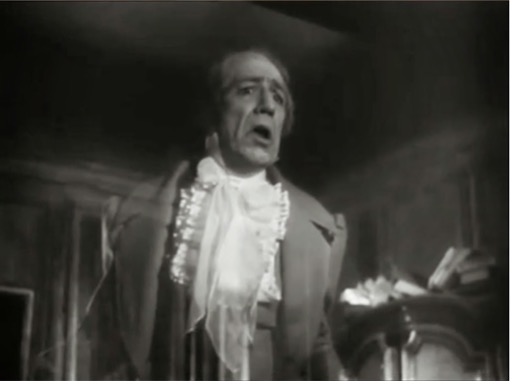
   One of the most treasured stories during the Christmas season is Charles Dickens’ A Christmas Carol. Scrooge is a miserly old man who cares only for his own welfare and not the welfare of the poor, the hungry, the cold, the fatherless. He has so much wealth that he doesn’t know what to do with it except squirrel it away. In fact, he’s such an old—well Scrooge—that he doesn’t even get self-enjoyment from his money. He lives in a huge house with the barest of furniture. His fireplace is barely alive except for a few small logs to which Scrooge himself needs to scoot up to the fireplace in order to glean any bit of warmth. Ebenezer Scrooge doesn’t see the path he’s placed himself on, and it was a path of destruction.

   His former partner’s ghost, Jacob Marley, has watched the fate of his former partner from the shadows of the spirit world. This spirit world that shadows Ebenezer Scrooge is one of suffering, misery, pain, and helplessness. Jacob Marley’s ghost was granted a rare opportunity—a very rare one indeed—to intervene in Scrooge’s life so that he might be spared the eternal suffering of walking the world in misery carrying the chain of greed and suffering that he has forged in his earthly life.

   The intervention comes in the form of three specters, or ghosts, who bring Ebenezer into the shadows of his life so that he can see his past that had shaped him in his present state of life, the shadows of his present state of affairs, and finally the shadows of his future end if he maintains his current path.

   Ebenezer Scrooge had a choice. The shadows were true. He could see these things for what they were and reject them, or he could see these things for what they were, accept them, and change his ways. The choice was his along with the fate with one or the other choice.

   Show us your steadfast love, O LORD,

                        and grant us your salvation.

   God’s people had seen their past. They were experiencing suffering of their own making in the present, and they didn’t like what they saw coming in the future. The only thing they could do is to cry out Yhwh their God. They saw what God had done in the past to deliver and bring salvation to His people. He intervened to deliver them from under the oppression of Pharaoh. They saw what God had done as He intervened for His people in the wilderness journey. There were so many times that Yhwh had intervened and acted in history on behalf of His people, and now they were praying that He might intervene and act again.

   Yhwh is the God of His word. He indeed would intervene in history and act in defense of humanity once again. He did this in the manger in the Person of the Christ child. There is where God intervened in this fallen, broken world. Mary and Joseph saw this. The shepherds who were abiding in their fields that night ran to Bethlehem and saw this. Throughout the Christ child’s life, people came flocking to Jesus to see Him. They weren’t interested in His height and weight, the color of His hair and eyes, etc. They came to see Jesus. Is He really who He claimed to be? He made the deaf hear, the blind to see, the lame to walk. He healed lepers and many other people who were rejected by society. He forgave sins of people who lived immorally. He hung around with the undesirables and poor. He even raised some dead people! Yes. This Christ child was truly different

   The greatest intervention, however, was when the Christ child suffered, bled, has His back shredded, was spit upon. The greatest intervention was when the Christ child suffered and died on the cross for your sins. When the Babe born in Bethlehem cried out, “It is finished,” His intervention ministry to forgive sins was complete. Your sins are completely paid for. You owe nothing to God. Come and see!

   Three days later the Christ child rose from the grave. He conquered death, damnation, and hell that each of us deserves, and He rose from the tomb that will encase and shut each of us in as well. The death and resurrection of the Christ child is God’s intervention and action in history. He has reversed the curse and the shadows of our past. He points us to the future which is there for each and every person who will repent and follow the Christ child. Which path will you follow? God has made you a Christian. He’s taken you out of the shadows of death and brought you into the Kingdom of the Christ child.

Psalm 85:4 Keep Your Eyes On the Gift

Tuesday, July 16, 2024

Keep Your Eyes On The Gift

Psalm 85:4

4          Restore us again O God of our salvation,

                        and put away your indignation toward us!

   During the Christmas season it’s very easy for our eyes to get distracted. There are the decorations, the Christmas parades in some areas, the glitter and glamour of the season. Then there are the sales, the lists, the parties and get togethers that vie for our time too.

   The people of God were in yet another predicament. This isn’t the first time their eyes had wandered away from God and to other glitzy and glamorous things that the world offers. And isn’t that the way the devil works? He makes so many promises through worldly ways. If you only do this, then you’ll get that. The ways of the world seem great and appealing. The ways of the world offer glitz and glamour. “What a great gift!” And maybe so—temporarily. However, there is no lasting hope, no lasting deliverance in the ways of the world. Promises made, but disappointment in the end.

   Restore us again. This is a prayer of repentance. Repentance is not something we can do on our own. It is the work and gift of the Holy Spirit in our lives. As fallen creatures, we are very comfortable in our sins and become complacent in them. Our eyes wander and we go down that path. This happens to every person; man, woman, and child, and it happens in the Christian’s life as well. We need help. Where are we turned? We’re turned to the God of our salvation.

   God gives you the gift of salvation in Jesus. Jesus’ name means “God is salvation.”

   Matthew 1:21 She will bear a son, and you shall call his name Jesus, for he will save his people from their sins.

   put away your indignation toward us! God’s anger is not because He’s an angry wrathful God simply looking for ways to make life miserable. God is not an angry God by nature. His indignation is caused because of sin. God created humanity to share in His glory and majesty. Because of the wandering eyes of our first parents, this relationship was destroyed, and we inherited their wandering eyes as well. Our wandering eyes and lives provoke the loving God to anger, and He’s got to do something about this. God is a just God, therefore He must punish sin. His justice is not contrary to His divine love. “Rather, it is an expression of divine love which has been offended, rejected and deeply grieved.”[1]

   God doesn’t put His stamp of approval on our sin. The penalty and penalty phase for sin must be meted out. However, in love and mercy God forgives sin. He turns His anger and wrath, not toward us, but rather on the Christ child, Jesus—God’s salvation. On the cross is where God sets His sight on His Son. At the cross is where God turned away His indignation toward us.

   God wants us to keep our eyes on Him and live according to His ways for our lives. However, when we rebel and sin—and we do rebel and sin against God because no one is perfect—God turns our eyes to His Gift. There’s nothing glitzy and glamorous about a Man suffering and dying on a cross. It’s when we realize that “this should have been me there,” that we understand and cherish God’s Gift in the manger.


[1]  kāʿas Groningen, Gerard Van. Harris, R. Laird, Gleason L. Archer, and Bruce K. Waltke, eds. Theological Wordbook of the Old Testament. Accordance electronic edition, version 2.5. Chicago: Moody Press, 1980.