What A Difference ADay Makes!

S.D.G.

Easter: Day of Resurrection! — 4/21/19

Isaiah 65:17-19

WHAT A DIFFERENCE A DAY MAKES: Amen & Amen!

Is. 65:17 “For behold, I create new heavens

and a new earth,

and the former things shall not be remembered

or come into mind.

18 But be glad and rejoice forever

in that which I create;

for behold, I create Jerusalem to be a joy,

and her people to be a gladness.

19 I will rejoice in Jerusalem

and be glad in my people;

no more shall be heard in it the sound of weeping

and the cry of distress.

Life can change so quickly. Can’t it? I have always been amazed at how fast life can change. Things are one way one day, and the next day they are totally different.

You just got the job! You just got the promotion.

I’m sorry. We have to let you go. WHAT A DIFFERENCE A DAY MAKES.

You’ve practiced hard long hours. You’ve won first place. You’ve won the tournament.

I’m sorry. Your injuries mean that you’ll never compete again.

You say ‘I do.” You’re married

I want a divorce. WHAT A DIFFERENCE A DAY MAKES

It’s a boy. It’s a girl.

I’m sorry. Your child didn’t make it.

You’re healthy as a horse.

I’m sorry. You have terminal cancer.

Congratulations! You got your driver’s license.

I’m sorry Dad. The doctor said that you can’t drive anymore.

I haven’t seen you in such a long time. It’s great to see you today!

We’re gathered together to say farewell to our dear Christian Brother or Sister.

What a difference a day makes!!!

Today is Easter. We celebrate the resurrection of Jesus Christ. What a glorious day for followers of Jesus! But we can’t have Easter without Good Friday, and we can’t have Good Friday without Easter. They go hand in hand.

We need to remember Good Friday in order to really appreciate what God has done for us. On Maundy Thursday—Maundy is Latin for Mandate; Jesus mandated and gave us His Supper in His body and blood. He puts Himself in this meal to strengthen our faith. The disciples needed that 2,000 years ago because in a few short hours Jesus was betrayed into the hands of guards and Jewish officials. He was let away and tried before a kangaroo court where they found Him guilty on trumped up charges.

They brought Him before Pontius Pilate and after caving into the peoples’ demands, Pilate had Jesus flogged and crucified. The Romans were the best in history in regard to devising the cruelest of tortures. They beat Jesus. They put a crown of thorns on His head, and these thorns weren’t the little thorns found on rose bushes. They flogged Him with hooks and metal balls on the ends of leather strips. As the hooks entered into the back, the flesh was ripped and shredded. This destroyed the muscles used for making the lungs works.

At the crucifixion, the criminals were nailed to crosses with their knees bent. This allowed them to push up and down so that they could breath. Once they became to tired to lift themselves up, they simply suffocated to death.

Gruesome. Yes, very much so. But we need to hear this because this is the suffering that Jesus went through to pay for our sins. Mel Gibson did a very good job on researching the crucifixion in his movie The Passion of the Christ. It’s rated R because of these scenes. But every Christian—young and old—should watch this.

I set this up because Jesus actually died. You can say that God was killable that Day on Good Friday. Jesus heart stopped beating. His blood stopped flowing. His eyes dilated. His brain activity ceased. He became like us in every way—including death. Jesus was dead as a doornail. But something greater happened as well. God placed your sins on Jesus that Day. When Jesus died, God declared that all your sins are now forgiven. Many people simply shrug their shoulders and say, “So what?” or “Big deal.” But it is a big deal because the barrier that stood between you and God is now gone. You owe nothing to God. It’s His free and awesome gift to you. WHAT A DIFFERENCE A DAY MAKES.

Jesus is dead. Satan thought he had won. The world thought they finally had this Jesus out of their hair and life could go on as before. But something happened 3 days later that no expected. Jesus would be raised from being dead—dead as a doornail! And that’s where our text comes in. It’s the Resurrection! WHAT A DIFFERENCE A DAY MAKES!

Is. 65:17 “For behold, I create new heavens

and a new earth,

and the former things shall not be remembered

or come into mind.

The Old Testament reading in Isaiah talks about a day that will make a difference in a lot of peoples’ lives. God speaks about a New Creation. He says, “Behold! Pay attention! Are you still tracking with Me? I create new heavens and a new earth; the former things shall not be remembered.”

The Greek translation of the Old Testament is called the Septuagint. What’s interesting here is that Greek word for “former things” is proteros. We get our English word ‘prototype’ from this. Do you know what a prototype is? It’s a first copy of something.

I had a friend who used to work for Buick designing cars. You have to design cars way out into the future in order to stay competitive. They then build a prototype of the car. This is what it’s gonna look like. However, no one knows what kind of technology and things will be available 10 or 15 years out into the future. So, the prototype is a functioning copy of what the final car will look like—but it’s not FULLY functioning.

All of this creation that we enjoy right now is a prototype of what God will restore in the future. These new heavens refer to the universe and the sky. Do you like looking at the sky? I do! The beautiful colors at dawn and sunset. The wonderful blues, rainbows, rain clouds. At night there are the magnificent stars, consolations and moon. When Jesus returns all of this will be restored. This is what God is saying here! Luther wrote about this. He said that on that Day when Jesus returns, we’ll look at the stars and say, “What small stars we had. And what a dim sun we had!” Think about that. You can’t even look at the sun right now without damaging your retinas or going blind. When Jesus returns, we’ll have an even better sun.

And the earth will be restored as well. ALL of creation will be restored by God back to the way He originally intended it to be. The rivers, lakes and seas will be pristine—just like God created them to be. The trees will be treeier; the flowers will be flowerier; greens will be greener; the scents will be more fragrant;

Is. 65:25 The wolf and the lamb shall graze together;

the lion shall eat straw like the ox,

and dust shall be the serpent’s food.

They shall not hurt or destroy

in all my holy mountain,”

says the LORD.

Satan, sin and death do not have the final word. God does. We do not get our own individual clouds to hover on for all of eternity. We’re not going to be playing bumper clouds. And we don’t get wings either.

God gives this only to people who die in the Christian faith—followers of Jesus. If people don’t want to spend time with Jesus here on earth, then they don’t have to worry about spending eternity with Him either. But that’s not you! You are followers of the Jesus, the resurrected Lord, and this is what God has waiting for you!

Is. 65:18 But be glad and rejoice forever

in that which I create;

for behold, I create Jerusalem to be a joy,

and her people to be a gladness.

WHAT A DIFFERENCE A DAY MAKES!

But there’s still one more thing. Where does this leave you and me in all of this? Well, you too will be raised from your graves—unless Jesus returns before that. Remember, Jesus was dead as a doornail. But He was raised from being dead to being alive nevermore to die! The Bible says that Jesus is the Firstfruits of the dead. Paul wrote this in 1Corinthians 15: “But in fact Christ has been raised from the dead, the firstfruits of those who have fallen asleep. For as by a man came death, by a man has come also the resurrection of the dead.” (1 Corinthians 15:20–21 ESV). Jesus was physically raised from the death. Matthew’s Gospel says that the women grabbed Jesus’ feet. Ghosts don’t have feet. On the first Easter evening Jesus appeared in the room with the disciples. He said to them, “Put your hands in My side and put your fingers in My wounds. I’m real. I’m not a ghost.”

This means that you better get used to your bodies you have right now because you’re going to be spending eternity in them. But they will be restored to the way God originally intended them to be. No more worrying about losing or gaining weight. No more blindness. No more deafness. No more cancer or stroke or dementia or Alzheimer. No more wheelchairs or walkers or canes. Those who lost limbs or were born without them will have them fully restored. No more emotional or mental issues; no more depression or bi-polar. None of those things and more because these are consequences of the powers of Sin and Death.

This, dear friends, is what Good Friday and Resurrection Day is all about! Just think: those who are blind—the first thing they will see is Jesus! Those who are deaf—the first thing they will hear is Jesus and the heavenly choir! WHAT A DIFFERENCE A DAY MAKES!

You’ve been united with Jesus in Baptism. What happens to Jesus happens to you. He was raised from the dead never to die again, and that’s our confidence and certain hope too. This is what Easter is all about. It’s about Jesus’ death and His resurrection for you.

What more is there to say to this except AMEN AND AMEN! YES, YES it shall be so!

Christ is risen! He is risen indeed!

Alleluia and Amen!
Lead Us Not Into Temptation: An Opportune Time

S.D.G.

Maundy Thursday: 4/18/19

Lord’s Prayer 6th Petition & Lord’s Supper

Lead Us Not Into Temptation: An Opportune Time

Bible Readings:

Jeremiah 31:31-34

Luke 4:12-13 & Luke 22:1-23

In the Name of Jesus Christ, the Suffering Servant of God; Dear Precious People of God:

Lead us not into temptation. The Gospel reading for this evening begins with the end of Jesus’ temptation by Satan in the Wilderness. It’s fitting that we begin the season of Lent with the Temptation of Jesus and close out the season of Lent with it as well because when Jesus overcame Satan’s temptations in the wilderness, that wasn’t the end of Satan’s temptations against Him.

Luke 4:13 And when the devil had ended every temptation, he departed from him until an opportune time.

This doesn’t mean that Satan simply rolled over and played dead with Jesus. He didn’t. He continued to tempt Jesus throughout His life and ministry. Jesus said so as He and his disciples celebrated the Passover: Luke 22:28 “You are those who have stayed with me in my trials

If Satan continued to tempt even the Son of God, you can bet that he continues to tempt us as well. He has never given up and he will never give up until the Day when Jesus returns.

Satan departed from Jesus until an opportune time. And the time Satan waited for was when Jesus was at His weakest. He needed to keep Jesus from going to the cross. He needed to keep Jesus from suffering, bleeding, being whipped and nailed. He needed to keep Jesus from wearing that crown of thorns. The opportune time he waited for was the night Jesus would celebrate the Passover with His disciples for the very last time.

Luke 22:1 Now the Feast of Unleavened Bread drew near, which is called the Passover. 2 And the chief priests and the scribes were seeking how to put him to death, for they feared the people.

3 Then Satan entered into Judas called Iscariot, who was of the number of the twelve. 4 He went away and conferred with the chief priests and officers how he might betray him to them. 5 And they were glad, and agreed to give him money. 6 So he consented and sought an opportunity to betray him to them in the absence of a crowd.

We want to blame Judas. He gave into the temptation of greed and financial gain by betraying his trust, friendship, and loyalty to Jesus. Temptation itself is not a sin. It’s when we give into it and consent that faith is compromised. Luther explains this in the Large Catechism concerning this petition: Lead us not into temptation:

[106] This, then, is what “leading us not into temptation” means: when God gives us power and strength to resist, even though the attack is not removed or ended. For no one can escape temptations and allurements as long as we live in the flesh and have the devil prowling around us. We cannot help but suffer attacks, and even be mired in them, but we pray here that we may not fall into them and be drowned by them.

[107] To experience attack, therefore, is quite a different thing from consenting to it or saying “Yes” to it.

Judas was tempted and he said ‘Yes’ to it. He gave into that temptation.

Jesus experienced temptation on the Mount of Olives. He prayed to the Father: Father, if you are willing, remove this cup from Me. Nevertheless, not my will, but yours, be done (Luke 22:42). This was Satan’s opportune time. This is what the devil was waiting for. He used Judas to carry out his plan. He committed sin and in doing so he betrayed Jesus and handed him over to the guards and officials. They led Jesus away that night and Jesus was found guilty of blasphemy in their kangaroo court. From there they led Jesus to Pontius Pilate to be beaten, whipped, flogged and nailed to the cross. But Jesus said, “NO.” He did not give into temptation.

We might be quick to judge Judas; to vilify him as if we have never given into temptation ourselves. Peter thought he could hold out, but he denied ever associating with Jesus—not once, but three times! And this was when Jesus needed him the most.

Right after the Lord’s Supper the disciples’ sin of pride got in their way. They argued with one another about who is the most important in Jesus’ inner circle—right after receiving the Lord’s Supper!

It’s interesting and very important to notice that NONE of the Gospel writers vilify Judas. They remember what Jesus said John 8:7 “Let him who is without sin among you be the first to throw a stone at her.” And later Paul would write: 1Corinthians 10:12 Therefore let anyone who thinks that he stands take heed lest he fall.

Who is this Judas? Who is the betrayer? Faced with this question, are we capable of more than asking with the disciples: “ Surely not I, Lord?” Before we condemn Judas too quickly, we need to take a look at our own lives. What temptations have you given into? What sins have you committed and are still committing. We are all guilty of breaking the covenant with God. We are all guilty and therefore none of us has a right to pass judgment on other people when they fail and fall. Satan is ALWAYS looking for an opportune time in your life to have you slip and fall from grace and faith. This is why Jesus told us to pray: Lead us NOT into temptation. Luther teaches us this in the Large Catechism:

[104] Then comes the devil, who baits and badgers us on all sides, but especially exerts himself where the conscience and spiritual matters are concerned. His purpose is to make us scorn and despise both the Word and the works of God, to tear us away from faith, hope, and love, to draw us into unbelief, false security, and stubbornness, or, on the contrary, to drive us into despair, denial of God, blasphemy, and countless other abominable sins. These are snares and nets; indeed, they are the real “flaming darts” that are venomously shot into our hearts, not by flesh and blood but by the devil.

Satan is ALWAYS looking for an opportune time in your life and mine. And there’s no shortage of them. That’s for sure.

But God also made a promise to you. We heard it again this evening in the Old Testament reading in Jeremiah:

Jer. 31:31 “Behold, the days are coming, declares the LORD, when I will make a new covenant … 32 not like the covenant that I made with their fathers on the day when I took them by the hand to bring them out of the land of Egypt, my covenant that they broke, …33 For this is the covenant … I will be their God, and they shall be my people. 34 …I will forgive their iniquity, and I will remember their sin no more.”

The Hebrew meaning for ‘remember’ in this verse means “to hold against them.” What God promises to you is that He will NOT hold your sins against you or hold you accountable for them. Why? Because He held your sins against Jesus. He became accountable for your sins. And that’s called grace and mercy. Satan tried to tempt Jesus from going to the cross. Remove this cup from Me if it be Your will. It wasn’t the Father’s will to do so because the Father’s will is to save you from your sins—the sins we commit as we give into temptations. The Father kept pressing and squeezing Jesus on the cross with His wrath. Jesus was drinking the Cup of God’s wrath filled with your sins and mine, and the sins of the whole world. And as He was squeezing Jesus with His wrath, Jesus was bleeding out the Cup of Blessing for you and for me. Jesus was bleeding out the New Covenant God made with you: I will forgive their iniquity and remember their sin no more.

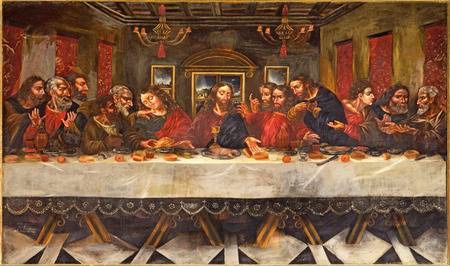
This is what Jesus gave His disciples on the night He was betrayed. This is what Jesus gives us in His Holy Supper. It’s not a cup of God’s wrath, but rather it is The cup of blessing and the New Covenant. This was Jesus’ opportune time to trump Satan and his schemes to tear you away from God’s grace.

Luke 22:17 And he took a cup, and when he had given thanks he said, “Take this, and divide it among yourselves. … 19 And he took bread, and when he had given thanks, he broke it and gave it to them, saying, “This is my body, which is given for you. Do this in remembrance of me.” 20 And likewise the cup after they had eaten, saying, “This cup that is poured out for you is the new covenant in my blood.

You see, the 6th Petition and Maundy Thursday go hand in hand. We most certainly will give into temptations. But rest assured dear Christian friends, that God’s grace and mercy to you far outstrips our sins against Him. Once again this evening is an opportune time for us to repent and receive God’s grace to you:

…33 For this is the covenant … I will be their God, and they shall be my people. 34 …I will forgive their iniquity, and I will remember their sin no more.”

“This is my body, which is given for you. Do this in remembrance of me.” 20 And likewise the cup after they had eaten, saying, “This cup that is poured out for you is the new covenant in my blood.

Lead us not into temptation.

To Jesus be the glory.

Amen.

Mountains of Moses

Transfiguration Sunday: Deuteronomy 34

Upon Which Mountain Do You Live?

God en gebed: juni 2014

Hi Kids,

Here’s a recording of today’s sermon. I had a number of positive comments on it, so I thought I’d share it with you. This is a recording of today’s radio program.

I love yous guys! Dad


Isaiah 50:4-10 “God’s Classroom”

Do you hear God? Or do you listen to Him? Receive your PhD from God! You’re invited to to class!

2D4914EC-6322-43B3-B438-43665C2657C9-4062-000004464952D823.JPEG


Psalm 23:1 What’s a shepherd?

OK family. It’s been a long while since I’ve done these. But you know what’s been going on in our family over the last six months. I’m “caught up,” so to speak, in my new assignment. And I should’ve started this a lot sooner. I’m doing it for yous guys, and family should take priority.

Psalm 23 is a favorite Psalm for many people. And it’s one of my favorites too-especially in the King James Version. Often times this Psalm is read and associated with those who have passed away because this Psalm is read a lot of times at funerals. I guess it’s because v. 4 talks about the valley of the shadow of death. I’ll address the valley later on.

“Shepherd” comes from the Hebrew verb rāʿâ . It means “to graze.” Shepherd in this Psalm is a participle of this verb. Do you remember what a participle is? A participle is a verbal noun. That means that there’s action associated with the noun. For example, “runner” is a verbal noun–a runner runs. That’s what he does. A “swimmer” swims because that’s what he does. And here, the Shepherd shepherds. That’s what the LORD does; He shepherds.

So, what does the shepherd do for his flock? Well, the first thing is that he’s not the hired shepherd, or hireling. The shepherd has a vested interest in his flock. He wants to protect them,. He loves them. He knows them by name and they know his voice and the flock listens to him (Click here to see a cool example of how the sheep know their shepherd’s voice).

Why do the sheep follow the shepherd? Well, he does a lot for them. That’s why. For instance, the shepherd travels with the flock. He goes before them to lead him to the pastures that he knows will be good for the flock. That implies that the shepherd also knows where the good pastures are located. He must be very familiar with the paths and routes. The shepherd must also be timely in leading the flock so that he can get them to the good watering places in a timely manner. If he doesn’t, then they will get thirsty and die.

The shepherd must get his flock back to their pens in time before nightfall. If he can’t, then the shepherd will stay awake all night in order to keep watch over the flock by night, watching out for thieves and dangerous animals.

This is a lot of stuff that the shepherd does for his sheep. And  there’s plenty more. Can you see how this translates over to Jesus who is THE Good Shepherd? He loves His flock; He loves you! He has a vested interest in His flock; He has a vested interest in you. Jesus went to the cross to defend us from our greatest enemies; our sin, death, and Satan himself. The Good Shepherd is victorious over all of these since He laid down His life for His sheep, only to take it up again on Easter morning. The Good Shepherd knows where the good pastures are, and He knows where and when to lead us there. The Good Shepherd also keeps watch over us 24/7. He never sleeps, and Jesus never goes off duty.

With Jesus as your shepherd, you lack nothing. He supplies all you need. What are some things you “need?” Are you confusing needs with wants? How do some of the duties of shepherds help you in understanding Jesus? And, how does this help you in your daily walk with Him?

I love you guys!

Dad

So, Are You A Saint? Why or Why Not?

 Saint John Baptist Stained Glass Saint Severin Church Paris

Hello Family!

Do you remember what November 1st is? Yup. All Saints’ Day. So here’s the question: What in the world is a saint anyway? What’s your answer? Well—-? And can you name any saints–other than the New Orleans Saints? If so, how many can you name?

Most people will say that a saint is a person who lived a holy life. Maybe it’s a person who did a lot of good things in this world and for other people before they died. The requirement for sainthood in the Roman Catholic Church is that the person had to live a good life worthy of imitation, or someone who converted and left immorality behind. This same person has to have at least two “postmortem” miracles attributed to them. Do you know what postmortem means? It means “after death.” Yup. Two miracles have to be attributed to the person after he or she has died. And the other requirement is—-the person has gotta be dead.

But, as good Lutheran Christians, we go to the Bible to find our answers. And what can we learn from the Bible about saints? Well, take a look at 1 Corinthians 1:2 as an example. What does it say there? Paul calls them saints. This is from the Greek word hagios, which means ‘holy one’.

But, what do you know about the congregation in Corinth. If Paul wrote this letter to them and began by calling them saints, then that means they must have been pretty good people with not a lot of issues going on. Right? Wrong! When you read this letter, the Corinthian Christians were living in ways that was anything but holy and moral. They were suing one another–Christians suing other Christians, the rich Christians were looking down their noses at the poorer Christians, some were coming to church drunk, and a stepson, who was a Christian, was sleeping with his stepmother and no one in the congregation seemed to have a problem with that. This was because they formerly were pagans and some of these practices were perfectly acceptable according to their former way of living. They were anything but ‘saints’, as many people would define that word.

However, Paul reminded them of who they were in Christ Jesus. That’s what Paul ALWAYS does in his letters. He never leaves his hearers and readers in doubt. And the Corinthians were holy saints because of their faith in Jesus Christ alone, and not by the way they were living. They received Jesus’ holiness when they were baptized. So, God saw Jesus in them and counted them as holy. He did NOT approve of their way of living, however. That’s why Paul called them to repentance-or to change their ways.

Have you ever considered yourself a saint? If not, how come? Is it because of things you’ve done in the past, or language you use, or how you might treat other people? What about your thoughts, words, and actions; are they fitting of a saint? If you don’t consider yourself a saint, then I want you to begin RIGHT NOW! When you look in the mirror as you brush your teeth, shave, do your hair or whatever you’re doing in front of the mirror, I want you to see Saint fill in your name. You are holy because of your baptism. You are holy because of your faith in Jesus. You are holy because the Holy Spirit dwells in you. That’s GOD’s HOLY SPIRIT! You can’t have anything holier that God living in you!! He turns sinners into saints–hagios holy people. Now we are to reflect God’s holiness to others in this world–but God knows that we will not do this perfectly.

So, what do you think about that? How does this change your perception of yourself? How should this change the way you treat others; the language you use; how you see other people? Sanctification means ‘holy living’. That does mean that we are going to do this perfectly. But it also doesn’t mean that we shouldn’t change try to change our ways either. Sanctification means that we are to repent–or turn away from–our old ways and bad habits. And this takes time and work.

What changes will you begin to make? What will try to work on? Remember, YOU ARE A SAINT! And that’s a great gift and good news from God.

I love you my holy ones! Dad


Looking Homeward (Deuteronomy 34:1-5)

Hello Family!

So, today is November 1st (well, now it’s November 2nd, but it’s still the 1st in my world). Do you know what November 1st is? It’s All Saints’ Day, which follows right on the heels of Halloween (celebration of evil spirits, ghosts, goblins, etc.). Today begins the Time of the Church calendar year called The Church Triumphant. This part of the calendar is the end of the Church year, which begins November 1st and goes until the first Sunday in Advent (the beginning of the new Church calendar year).

It’s no accident that the Church Triumphant follows on the heels of the Church Militant theme of the Church calendar. The Church Militant focuses on the struggles, temptations, and spiritual warfare that faces the Christian Church and Christians on this side of heaven. Now the focus changes toward the Final Triumph for Christians as we wait for the Lord Jesus Christ to return visibly and take His people home.

Home. What is home? Home is where family is. Home is where there is safety and security for family members. Home is where there is comfort and security. Home is where love is found. Home is home. It’s not the same for a person when someone is away from home and that person desires to be there. Memories are there. Joy is there. People want to be home for the holidays–Thanksgiving and Christmas. It’s not fun to be separated from a place and people that one wants to be with. Mom’s new favorite commercial is the Pizza Hut commercial where the cute little homesick alien is looking at a round pizza pie and he says, “Round. Round like home.” He wants to get back home in the worst way. (Click here for the 30 second version of the commercial.)

Today’s reading includes Deuteronomy 34:1-5. This is the end of Moses’ journey and work for the LORD. God sent him into Egypt to free God’s people from bondage and slavery, and Moses was chosen by God to lead His people into the Promised Land, their new home. This true story is known as the Exodus (‘ex’ means ‘out of’ in Greek), which began in Egypt under slavery and bondage. The people were led to the end of their journey as they were delivered home to the Promised Land. However, Moses was not allowed to go into the Promised Land (Read Numbers 20:1-10 to find out what sin Moses committed against God so that he was not allowed into the Promised Land. God forgives sin. Yet sin still brings consequences). He was almost home. But he wasn’t quite there. However, God allowed Moses to see it from afar with his own eyes. Nevertheless, Moses trusted in God’s promises that he would make it to the ultimate Promised Land–Heaven–because of his faith in God.

Sin separated us from God and heaven–the Promised Land. If it weren’t for Jesus, we would be standing from afar only looking at it, but never having the chance to enter into it and enjoy it. Try to imagine what that would be like. It’s torment (Jesus told a parable about The Rich Man & Lazarus as He describes what this is like).

Heaven is God’s home. Heaven is governed by God. Therefore, God sets the rules and requirements for who He allows into His home. And the requirement is perfection and 100% holiness. That’s a real bummer for us because we cannot attain that on our own. In fact, there’s nothing we can do to earn or work our way into Heaven. However, Jesus took care of that for us on the cross. There is where He paid for our sins completely 100%. He met the requirements for us. Now, because of your faith in Jesus alone, God says, “You are a part of My family. You will be with Me as we live together at Home.”

That’s our certain hope as Christians. We are still on the journey here on earth until Jesus visibly returns to take us Home. But we are not alone. Jesus is with you everyday. Jesus comes to us when we hear His promises in Church, when we read His promises in the Bible, and when we receive Christ’s Body & Blood in Holy Communion as He brings a part of the Promised Land to us.

  1. What do you think was going through Moses’ mind as he stood on the top of Mt. Nebo looking at the Promised Land that he could not enter?
  2. What might he had been thinking about the sin he committed against God, which kept him from entering?
  3. Even though he couldn’t enter the Promised Land at that time, what promises from God did Moses cling on to?
  4. How are we like Moses?
  5. What is the promise Jesus makes to us in Matthew 28:20b?

Prayer: Heavenly Father, I am sorry for my disobedience and sins against You. I do not deserve to be a part of Your family, nor do I deserve to enter into the eternal Promised Land of Heaven Your home. Yet, You are loving and forgiving. You sent Your Son to suffer and die on the cross for the forgiveness of my sins. Thank you for Your love toward me. Thank You for giving me faith in Jesus Christ my Savior. And thank You Jesus for walking with me everyday as You lead me to the Promised Land. In Jesus’ Name. Amen.

Fears, Worries & Insecurities? ‘Nevertheless’ (Psalm 62:1-10)

Man balancing on the rope concept of risk taking and challenge Stock Photo - 46627370

Hi Family,

What kinds frustrations are you dealing with today? Is there anything you feel insecure about or are afraid of? Are you anxious and worried about something in your life? God shows us in His Word today (Psalm 62:1-10) how to handle these sorts of things as His people. He wants us to have a ‘nevertheless’ kind of faith and trust in Him.

Do you know what nevertheless means? It means that despite what a person knows or feels to be true, he or she will do it anyway. For instance, “although I’m a little afraid, nevertheless I’d like to try it anyway.” We do contrary, or opposite, of what we know or feel to be true at that time.

The reality is that we, and all people, go through times of frustration, insecurity, fears and anxiousness. These are all real and they are a part of the world that we live in. However, or nevertheless, God wants us to trust Him. And that’s what this Psalm is about.

There’s a little tiny Hebrew word ‘ak. It means ‘nevertheless’. It’s used six times in this Psalm, but it’s not translated in the English. It’s used more like a marker of sorts that God’s people who prayed this Psalm in Hebrew would know and understand. ‘ak begins each verse in Psalm 62:1, 2, 4, 5, 6, 9 [in Hebrew vv 2, 3, 5, 6, 7, 10}. So the Psalm should be read:

  1. (62:1) Nevertheless for God alone my soul waits in silence
  2. (62:2) Nevertheless He is alone is my rock and my salvation
  3. (62:4) Nevertheless they [the enemies] plan to thrust Him {God} down from His high position
  4. (62:5) Nerveless for God alone my soul waits in silence
  5. (62:6) Nevertheless He only is my rock and salvation
  6. (62:9) Nevertheless those of low estate are but a breath

King David was going through some problems or issues that made him have some fears or worries. We don’t know what the issues were, but he was going through something that challenged his faith. He looked to God with trust knowing that, whatever he was fearing and worrying about, nevertheless, God was there for him.

Each of you is a baptized child of God. You are very important and precious to Him because of your faith in Jesus. Remember, Jesus died on the cross and rose on Easter morning for you! You already possess the best gift anyone can have, namely a place in heaven with Jesus Christ. You are one of God’s precious people. Nevertheless, on this side of heaven in this world we will have fears, insecurities, anxieties and worries, and frustrations. So, Jesus wants us to put our faith into action by putting our hope and trust in Him. Jesus gives us the peace of God that passes all understanding in this world (Philippians 4:7). His Holy Spirit gives us a sense of peace and stillness as we yield everything over to Him to deal with.

So, what kinds of frustrations are you dealing with today? Is there anything you feel insecure about? Are you anxious and worried about something in your life? Is there something that you’re unsure about and makes you afraid? Whatever it is, that’s OK. Nevertheless … look to Jesus and trust in Him. He will help you and keep you.

I love you guys! Dad


Silence Is Golden! (Psalm 37:7-8)

Sunset over water

Silence! Patience! I know some of you in the family are more patient than others. And, as you will attest, I’m not always the most patient in the family–though I have made great strides over the last couple of months. But silence in this family? Ha! That’s a good one! The Redekers are great talkers and we love to be with people. So, silence is a foreign concept in our household.

Finishing up with Psalm 37:7-8 and dealing with fretting, God calls His people to be silent. That means ‘to keep quiet.’ Everything that causes us to be anxious, to worry and to be angry–we are to hand it over to God. Once we do that then we are to be silent. God puts His finger over our lips and says, “Shhhhhh. Don’t worry about it anymore. I will take care of everything. Be patient. Be still. And trust Me.”

Lips

Patience can be hard for anyone to practice, regardless if the person is 100 years old or 2 years old. But as the saying goes patience is a virtue. When we hand our problems, troubles, frets, anger and worries over to God to handle, then what should we do as we patiently and silently wait? Pray! Pray through the problem or the concern. It doesn’t have to be a fancy prayer. And it doesn’t have to be a long prayer. When we get impatient, we can simply pray, “Lord, I know You’re in control.”

Verse 8 reminds us about anger. This might be anger toward God, and it might be anger toward another person. We are to refrain from anger. Anger, like fretting and needless worrying, doesn’t do us any good at all. In fact, it eats away at our insides and it makes us feel like we simply want to explode. But what good does that do us? No good at all! And it doesn’t make the situation any better. Does it? It only makes the person who is angry more miserable.

anger: Anger, rage, shout.

What does God want us to do? Refrain from it!! That means abandon anger, desert it, leave it in the lurch by releasing it. Don’t hang on to it, but again, let God deal with it. Trust God and pray for His guidance. When we hand everything over to God and let go of things, then a sense of peace comes upon us. We know that even though we are not in control, God is in control. We are then freed up to lead a life with God’s peace and security.

So, what did we learn from Psalm 37:3-10?

TRUST God. He replaces our insecurities with His faithfulness and security. Everything begins with trust: We should revere, love and trust in God above all things.

DELIGHT in the Lord. Wrap yourself up in Jesus. He softens the bumpy road and smooths out the rough spots in life so that it’s not so bumpy.

COMMIT to the Lord. Let Jesus roll your problems over to God. After all, the stone was rolled over the tomb where Jesus lay. But then 3 days later on Easter, He rolled the stone away.

BE STILL. Silence is golden before the Lord. Jesus was silent and patient with us as He hung on the cross on Good Friday.

REFRAIN. Abandon all our problems and worries over to Jesus. Release them and let Him handle them for us.

Prayer: Dear Lord; sometimes life can get real tough and hard to handle. Sometimes I get angry and it brews and festers inside of me. Forgive me for trying to handle everything on my own. You care for me and You want the best for me, including living a life free from anger worry, anxiousness and fretting. Help me to trust You more and hand everything over to Jesus to take of things for me. In Jesus Name I pray. Amen.

I love you guys! Dad

Roll With the Changes (Psalm 37:5-6)

Vintage Photo of People Pushing Old Car

Fretting, anxiousness, and unnecessary worrying is very easy to do. We might have some good reasons for this. Nevertheless, God doesn’t want His people to fret. And He gives the antidote to fretting. That’s why I’m continuing on with Psalm 37 for a couple of days because there’s SO MUCH great stuff in here to help us, as God’s people, to commit everything over to God and let Him handle our problems so that  we can continue to live life the way He wants His people to live it.

Have you ever rolled a heavy object? For instance, have you ever had to push a car that died? I know I have. When I was young, my friends and I didn’t have money for new cars. We had beaters (and they were a lot of fun)! But they also died out once in a while. That would mean we would have to get out and push them. Now, back then cars were really cars–they were made out of heavy metal and steel. It was really hard and difficult to begin to push the car and get it moving. But once there was momentum, the car would move much more easily. The hard part was the initial pushing to get it moving.

Psalm 37:5-6 builds on what we read the last two days about how to deal with fretting and worrying. God wants us to ‘commit’ our way/life and all our problems over to Him, and then ‘trust’ Him. There’s that word ‘trust’ again (see October 17 for ‘trust’). The word ‘commit’ means ‘to roll or turn,’ like a huge heavy boulder to close up a well or a cave. Fretting and worrying can become heavy burdens. And the more we try handling things on our own, the heavier that stone can become. Roll it over to God to handle. Hand it over to Jesus because we can’t roll that stone on our own. Turn that stone over to Him and trust Him, because He’s the One who has already sealed our cave and deep well of sin.

What are some problems or worries you might be facing today? Are you trying to handle them yourself? Do you think you can do a better job than Jesus can at solving your problems or worries? What might be holding you back from committing them/turning and rolling them over to Jesus?

Prayer: Heavenly Father; it would be so wonderful if everything in life were easy and care-free. But it’s not. And if life were that way, then we might find ourselves not needing You and walking away from you. Whatever problems and worries we may have today, we turn them over to you. We trust you Lord. Help us in our lack of trust. We roll everything over to you in Jesus name. Amen.

I love you! Dad