5 Thou preparest a table before me
in the presence of mine enemies:
Thou anointest my head with oil;
my cup runneth over.
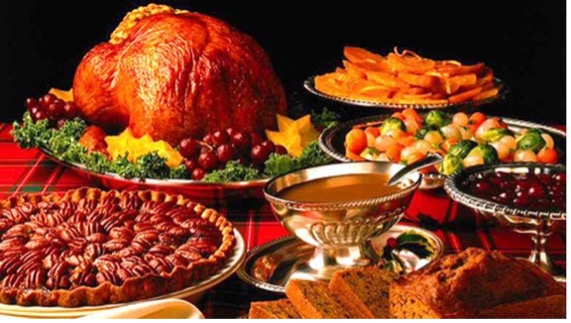
Who doesn’t like a great food? Who doesn’t like to go to a banquet, especially when it’s free of charge and on someone else’s dime? I love food, and especially good ol’ Sheboygan brats made the correct way. And what way is that? Well, I’m glad you asked. You soak the brats in beer, butter, and onions for a few hours. And after “fryin’ the brats” on the grill they’re served on Sheboygan hard rolls. Sheboygan hard rolls are the only way to go, but you can’t get them anywhere else except in Sheboygan. Brats on hamburger or hotdog buns is pretty much illegal Sheboygan. But that’s the way it goes for most people who are not from Sheboygan. But I digress.
In this Psalm King David suddenly shifts imagery from shepherd and sheep to a banquet with fine food and the host serving his guests. The banquet is served in the midst of God’s enemies. They’re on the outside looking in. They’re not participants in God’s banquet. It’s not that they weren’t invited to attend. They were invited, but they refused God’s invitation.
It’s the same today. God sends out His invitation to any and all people. It’s not that He hasn’t or doesn’t invite them. He does! But many, like in ancient times, still refuse God’s invitation.
But you haven’t refused. God’s invitation has gone out and you responded with a yes and a thank you. God doesn’t care who you are. The invitation is there. God doesn’t care what you have done. Sins are forgiven at the cross. The invitation is there. He doesn’t care if you’re rich or poor, black or white or any other color. God has a magnificent paint brush as He created all people. The invitation is there.
God has His heavenly banquet waiting for you. But God also knows that we can’t wait that long. We need His future banquet NOW, in this life, where sins and the ways of the world can starve us. The feeding of the 5,000 points to that eschatological (the future final things) banquet feast.
Jesus sits the people on the now green, fresh grass. He takes the bread and the fish, and He blesses them. The Greek word there is eulogeō (oy-lo-GEH-oh). When God eulogeō-s[1] things, miracles happen. He eulogeō-s the bread and fish multiplying them to the point where all who were present had their fill and were satisfied.
This points forward to God’s heavenly banquet where all will have their fill of all of God’s blessings and love unhindered by sin and death.[2] Until that time, God knows that without Him in this world we would go into starvation mode. This is why Jesus gave us His Body and Blood in the bread and the wind. As He eulogeō-s the bread and fish and a miracle happens so too Jesus eulogeō-s the Passover meal with the miracle of putting His Body and Blood in, with, and under the bread and the wine, The Host brings His guests—you—His future heavenly banquet into the present because we need it, and we need it now!
From some of the Ancient Church Fathers:[3]
THE BREAD AND CUP OF THE FEAST. AMBROSE: “You have prepared a banquet in my sight.” This banquet consists of the living Bread,36 the Word of God. At this banquet there is the oil of sanctification, poured richly over the head of the just. This oil strengthens the inner senses. It does away with the oil of the sinner that fattens the head.37 In this banquet, too, you have the cup that inebriates: “how excellent” it is, or “how powerful,” for the Greek has kratiston, meaning most mighty, strong or powerful. Surely it is a powerful cup that washes away every stain of sin. COMMENTARY ON TWELVE PSALMS 35.19.
THE CUP THAT SOBERS. CYPRIAN: The inebriation of the cup and of the blood of the Lord is not like the inebriation coming from worldly wine, since the Holy Spirit says in the psalm, “Your cup that inebriates,” and adds, “how excellent it is,”39 because the cup of the Lord inebriates in such a way that it makes people sober, that it brings minds to spiritual wisdom, that from the taste for this world each one returns to the knowledge of God. And, as the mind is relaxed by that ordinary wine and the soul is eased and all sadness is set aside, so, when the blood of the Lord and the lifegiving cup have been drunk, the memory of the old man40 is set aside, and there is induced forgetfulness of former, worldly behavior, and the sorrowful and sad heart, which was formerly pressed down with distressing sins, is now eased by the joy of the divine mercy. This can delight the one who drinks in the church of the Lord, but only if what is drunk keeps to the truth of the Lord. LETTER 63.11.THE LORD’S BLOOD. CASSIODORUS: The cup is . . . the Lord’s blood, which inebriates in such a way that it heals the mind, restraining it from wrongs, not inducing it to sins. This intoxication renders us sober; this fullness empties us of evils. He who is not filled from this cup ends up hungry and in perpetual need. EXPLANATION OF THE PSALMS 23.5
[1] James W. Voelz, Concordia Commentary: Mark 1:1–8:26, ed. Dean O. Wenthe (St. Louis, MO: Concordia Publishing House, 2013), 428–429.
[2] James W. Voelz, Concordia Commentary: Mark 1:1–8:26, ed. Dean O. Wenthe (St. Louis, MO: Concordia Publishing House, 2013), 428–429.
[3] Blaising, Craig A. and Carmen S. Hardin, eds., Psalms 1–50. ACCS 7. ICCS/Accordance electronic edition, version 2.6. Downers Grove: InterVarsity Press, 2008. 181.
 A Redeker Respite